
Multi-stem Trees
Styphnolobium japonicum
Pagoda tree (formerly Sophora japonica)
Graceful, feathery foliage and creamy summer flowers, combined with real toughness in heat and drought. Styphnolobium japonicum, still widely known as Sophora japonica, is a tree for a changing climate.
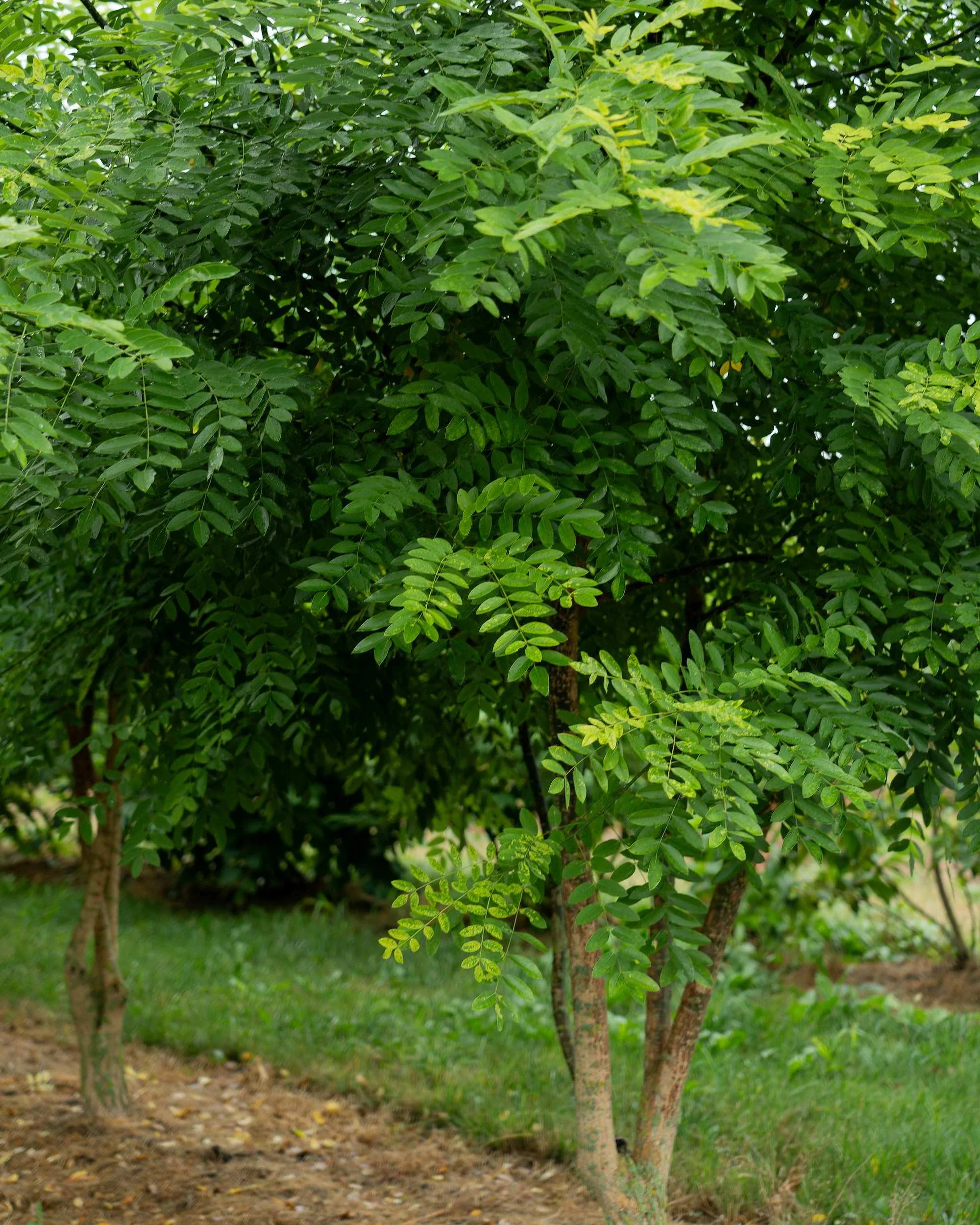
Fine, feathery pinnate leaves
Creamy-white flowers in late summer on mature trees
Tolerant of heat, drought and urban conditions
An elegant, airy canopy
Please check before you visit. Our nursery is very well stocked, but what we hold changes with the seasons, so this plant may not always be in stock. Enquire before you head over and we will check availability and the sizes we have for you.
At a glance
Type
Multi-stem tree
Foliage
Deciduous
Seasons of interest
Summer foliage, late summer flowers, autumn colour
Eventual size
Typically over 12 m tall in time
Position
Full sun
Soil
Well-drained, including poor and dry soils
Hardiness
Fully hardy in the UK
Available
A range of sizes and forms. Ask our team for current specimens and pricing.
Why we love it
Styphnolobium japonicum, the pagoda tree, has a lightness that is hard to match in a large tree. Its long, pinnate leaves are made up of many small, dark green leaflets that create an airy, almost fern-like canopy, casting soft, dappled shade. On mature trees, in late summer, sprays of creamy white, scented pea flowers appear at the branch tips, followed by curious pods that look like strings of beads. In autumn the foliage turns yellow.
As a multi-stem it becomes a broad, spreading tree with several characterful stems and a graceful, layered outline. It was long known as Sophora japonica and, despite its name, is native to China and Korea, though it has been planted at temples in Japan for centuries. Designers value it for flowering at an unusual time of year and for its tolerance of heat, drought and urban conditions.
Choosing a size
Multi-stem trees are chosen by height and spread. The pagoda tree becomes large in time, so think about the space it will grow into. A younger tree suits larger gardens where it can develop freely, while a mature specimen gives you an established canopy and stronger stems straight away. Each one has its own shape, so we encourage choosing yours by eye at the nursery.
How to use it
Use it as a shade tree for a large lawn or terrace, or as a feature in parks, courtyards and city gardens, where it copes well with pollution and reflected heat. The light canopy allows grasses and sun-loving perennials such as Salvia, Echinacea and Sesleria to grow beneath, and it suits gravel and dry gardens beautifully.
Planting
Plant root-balled trees between November and March, and pot-grown trees at any time of year with regular watering. Dig a hole two to three times the width of the root ball but no deeper, set the tree level with the soil, and stake or guy it to hold the roots steady. Backfill, firm gently, water thoroughly and finish with a peat-free mulch.
Looking after it
Water deeply through dry spells for the first two summers; after that it is very drought tolerant. Pruning is rarely needed, but any shaping or removal of crossing branches is best done while the tree is dormant in late winter. It grows well in most well-drained soils, including poor, sandy and dry ground, and needs full sun.
Why is my pagoda tree not flowering?
Patience is the main answer. Styphnolobium japonicum usually only begins to flower once it is mature, which can take a couple of decades or more, and it flowers most freely after long, hot summers. Planting it in full sun on free-draining soil gives it the best chance. In the meantime, the elegant foliage and light canopy are reason enough to grow it.
See it in person
Every plant at Form is hand-selected, none contains new peat, and nothing beats choosing yours by eye. Visit our Row Town showroom in Surrey, just 30 minutes from London, where our team will show you the best of what is on the nursery right now. We deliver across London, Surrey and the Home Counties, and nationwide.
Walk in any time during opening hours and you will be looked after. If you would like dedicated time with a specialist, book a Genus Bar appointment.

Frequently asked questions
-
Styphnolobium japonicum typically grows over 12m tall in time, with a broad, rounded crown, so it is best suited to larger gardens.
-
Yes. It was long known as Sophora japonica and was later moved into its own genus, Styphnolobium. You will still see both names used.
-
Mature trees flower in late summer, usually August to September, with sprays of creamy white, lightly scented pea flowers.
-
Yes, its late summer flowers are very attractive to bees at a time when many other trees have finished flowering.
-
The seeds and pods are considered toxic if eaten, so it is sensible to keep children and pets from chewing them.
-
Yes, once established it is very tolerant of drought, heat and poor soils, which makes it a valuable tree for a changing climate.
-
It grows at a moderate rate, typically 30 to 60cm a year once established.
-
No, despite its name it is native to China and Korea. It earned its common names from its long history of planting at Buddhist temples in Japan and China.
-
We keep a very well-stocked nursery, but our stock changes with the seasons, so availability varies. Please email us before you visit and we will check what we have and the sizes available.
-
Yes, and we would love you to. Every multi-stem tree is individual, with its own branch structure and character, so we always encourage customers to choose by eye. Our largest specimens are held at our Row Town showroom in Surrey. Walk in any time during opening hours, or book a Genus Bar appointment with one of our specialists. If you can’t visit, we are happy to send photographs of individual trees.
-
Yes, we deliver nationwide. Deliveries are arranged by our dedicated in-house operations team, and larger specimens can be offloaded by HI-AB or Moffett where needed. We will always agree the most suitable option with you before delivery.
All our multi-stem trees
Explore every tree in our multi-stem trees collection, or view them all with photographs →
Styphnolobium japonicum
Can’t see what you’re looking for?
Get in touch and we’ll help you find it. Our nursery is very well stocked and we can source almost any plant through our network of trusted growers. Email info@formplants.com, or send us your whole plant list through our bespoke sourcing service.