
Multi-stem Trees
Osmanthus heterophyllus
Holly olive
Holly-like evergreen leaves and tiny, deliciously scented white flowers in autumn. Osmanthus heterophyllus brings structure and an unexpected autumn fragrance to the garden.
Glossy, holly-like evergreen leaves
Sweetly scented white flowers in autumn
Dense and slow-growing
Excellent for clipping and screening
Please check before you visit. Our nursery is very well stocked, but what we hold changes with the seasons, so this plant may not always be in stock. Enquire before you head over and we will check availability and the sizes we have for you.
At a glance
Type
Multi-stem tree
Foliage
Evergreen
Seasons of interest
Year-round foliage, autumn scent
Eventual size
Typically 2 to 4 m tall
Position
Full sun or partial shade
Soil
Most well-drained soils
Hardiness
Fully hardy in the UK
Available
A range of sizes and forms. Ask our team for current specimens and pricing.
Why we love it
Osmanthus heterophyllus, the holly olive, is an evergreen with a delightful surprise. For most of the year it looks rather like a refined holly, with glossy, dark green leaves that are spiny on younger growth and smoother on older branches, which is where the name heterophyllus, meaning different leaves, comes from. Then in autumn it produces clusters of tiny white flowers with a sweet, honeyed fragrance that fills the air when the rest of the garden is winding down.
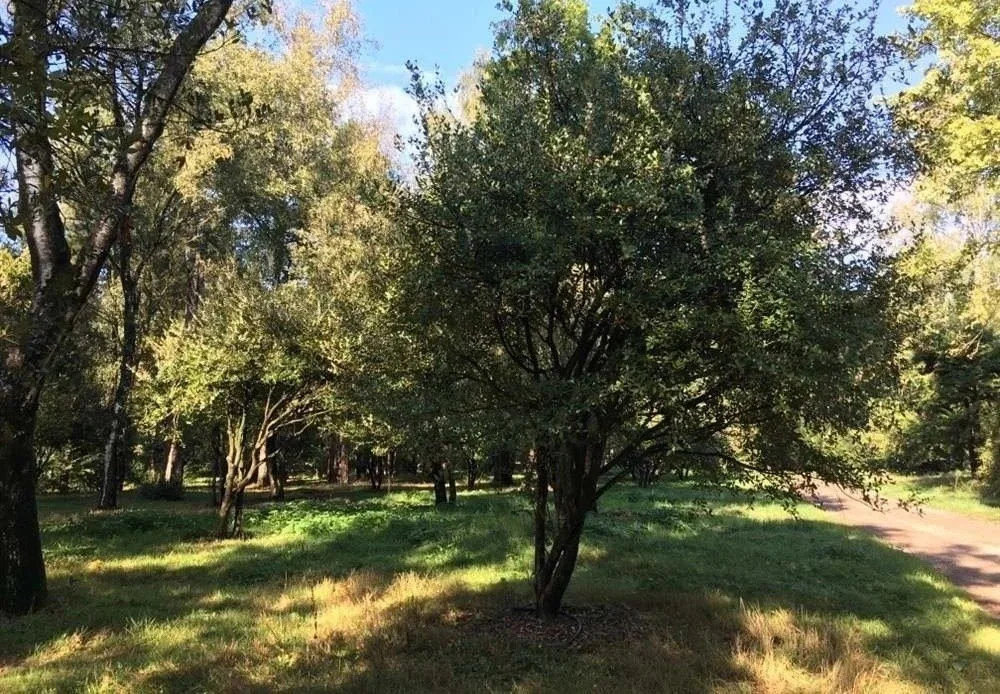
As a multi-stem it makes a dense, rounded evergreen tree with several stems, offering year-round structure and privacy. Native to Japan and Taiwan, it is fully hardy, tolerant of sun or shade and very adaptable, and its glossy foliage brightens darker corners of the garden. Designers use it as a softer, more refined alternative to holly or laurel.
Choosing a size
Multi-stem holly olives are chosen by height and spread. As it grows fairly slowly, a well-developed specimen gives instant evergreen presence and a full canopy, while a smaller tree works well in a pot or a border you are happy to watch fill out. Each tree's shape is different, so choosing by eye is the best approach.
How to use it
Plant it to add evergreen structure to a shady border, screen a boundary or anchor a corner of the garden. It looks smart lightly clipped into a dome or left soft and informal, and it is excellent in large containers either side of a doorway. Position it close to a path or seating area to enjoy the autumn scent, and pair it with ferns, hellebores and autumn-flowering Cyclamen.
Planting
Plant root-balled trees in autumn or spring, and pot-grown trees year-round if watered in dry spells. Dig a hole two to three times as wide as the root ball but no deeper, plant at the original level, stake taller trees and backfill with the original soil. Water in thoroughly and mulch with peat-free compost.
Looking after it
Water deeply in dry spells for the first two summers, and in dry springs too, as evergreens lose moisture all year. Because it flowers in autumn, prune or clip in spring, once the risk of hard frost has passed, to shape the crown and keep it dense. It grows well in most well-drained soils, including clay and chalk, provided they are not waterlogged.
What is the difference between holly and Osmanthus heterophyllus?
They look very similar, but the easiest way to tell them apart is by the leaves: on Osmanthus heterophyllus they are arranged in opposite pairs along the stem, while on holly they alternate. The holly olive also has sweetly scented autumn flowers, and its fruits are dark blue-black rather than red.
See it in person
Every plant at Form is hand-selected, none contains new peat, and nothing beats choosing yours by eye. Visit our Row Town showroom in Surrey, just 30 minutes from London, where our team will show you the best of what is on the nursery right now. We deliver across London, Surrey and the Home Counties, and nationwide.
Walk in any time during opening hours and you will be looked after. If you would like dedicated time with a specialist, book a Genus Bar appointment.

Frequently asked questions
-
It typically reaches 2 to 4m tall with a similar spread, forming a dense, rounded small tree.
-
It flowers in autumn, usually September to October, with small, white, sweetly scented flowers.
-
Yes, it keeps its glossy, dark green leaves all year round.
-
Younger growth has spiny, holly-like leaves, while older growth often has smoother leaves with fewer spines.
-
Yes, it grows in full sun or partial shade and is a good evergreen for brightening shadier spots.
-
It grows slowly to moderately, usually around 15 to 30cm a year once established.
-
Yes, it responds well to clipping and can be kept as a neat dome or used as a hedge. Clip in spring.
-
Yes, it grows well in a large container of peat-free, loam-based compost. Keep it watered through dry spells.
-
We keep a very well-stocked nursery, but our stock changes with the seasons, so availability varies. Please email us before you visit and we will check what we have and the sizes available.
-
Yes, and we would love you to. Every multi-stem tree is individual, with its own branch structure and character, so we always encourage customers to choose by eye. Our largest specimens are held at our Row Town showroom in Surrey. Walk in any time during opening hours, or book a Genus Bar appointment with one of our specialists. If you can’t visit, we are happy to send photographs of individual trees.
-
Yes, we deliver nationwide. Deliveries are arranged by our dedicated in-house operations team, and larger specimens can be offloaded by HI-AB or Moffett where needed. We will always agree the most suitable option with you before delivery.
All our multi-stem trees
Explore every tree in our multi-stem trees collection, or view them all with photographs →
Osmanthus heterophyllus
Can’t see what you’re looking for?
Get in touch and we’ll help you find it. Our nursery is very well stocked and we can source almost any plant through our network of trusted growers. Email info@formplants.com, or send us your whole plant list through our bespoke sourcing service.