
Multi-stem Trees
Nyssa sylvatica
Tupelo
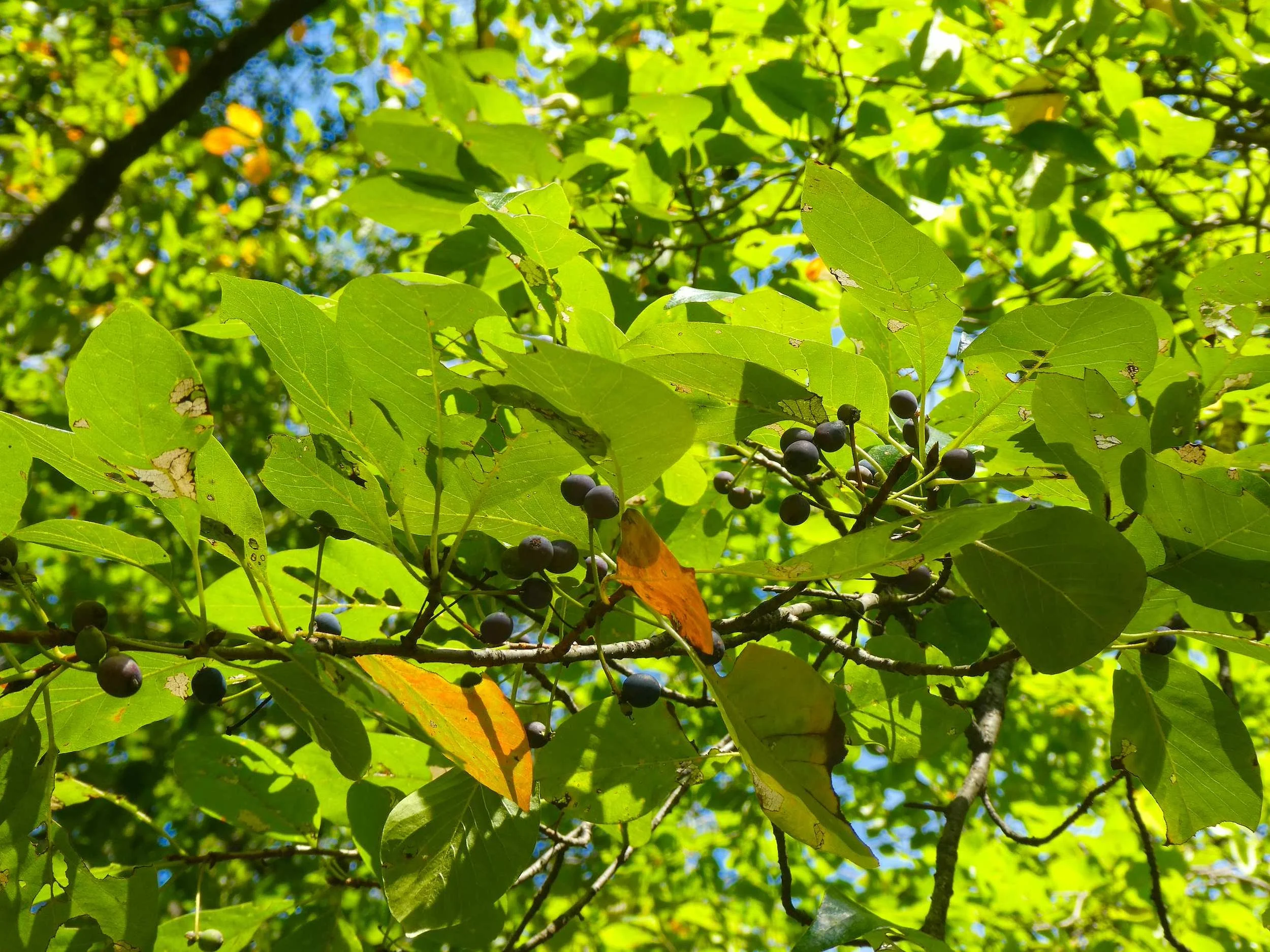
Glossy summer leaves that turn the most brilliant scarlet in autumn. Nyssa sylvatica has some of the finest autumn colour of any tree.
Spectacular scarlet autumn colour
Glossy, dark green summer leaves
Tolerates damp ground
Elegant, conical habit
Please check before you visit. Our nursery is very well stocked, but what we hold changes with the seasons, so this plant may not always be in stock. Enquire before you head over and we will check availability and the sizes we have for you.
At a glance
Type
Multi-stem tree
Foliage
Deciduous
Seasons of interest
Summer foliage, autumn colour
Eventual size
Typically 8 to 12 m tall in time
Position
Full sun or partial shade
Soil
Moist, neutral to acid; copes with damp ground
Hardiness
Fully hardy in the UK
Available
A range of sizes and forms. Ask our team for current specimens and pricing.
Why we love it
For autumn colour, Nyssa sylvatica is in a class of its own. All summer it carries glossy, deep green leaves that look healthy and fresh, then in autumn the canopy ignites in brilliant scarlet, orange, yellow and plum, often with several colours on the tree at once. It is one of the most reliable trees for colour in UK gardens. In early summer, small greenish flowers appear that are easy to overlook but much loved by bees.
As a multi-stem, the tupelo develops a graceful, broadly conical shape with horizontal, slightly drooping branches, giving it a calm, elegant presence in the garden. Native to the eastern United States, it grows naturally in damp woodland and swamp margins, so it is one of the few ornamental trees that copes with wet ground. Designers prize it as a long-term specimen with real autumn drama.
Choosing a size
Multi-stem tupelos are chosen by height and spread. Nyssa is slow to settle after planting, so a well-established tree gives you real presence from the start, while a younger tree can be the better choice where you are happy to wait and enjoy watching it develop. Each tree has its own branching pattern, so we recommend choosing yours by eye.
How to use it
Plant it as a specimen in a lawn, near a pond or stream, or in a damp corner where other trees struggle. It is a beautiful focal point in larger gardens and parks, and works well in a naturalistic or woodland scheme underplanted with ferns, Carex and moisture-loving perennials. Position it where low autumn sun will shine through the leaves.
Planting
Nyssa has a deep taproot and dislikes root disturbance, so handle the root ball with care and plant in its permanent position. Plant root-balled trees between November and March, or pot-grown trees year-round with good aftercare. Dig a hole two to three times as wide as the root ball but no deeper, plant at the same level, stake, water thoroughly and mulch with peat-free compost.
Looking after it
Keep it well watered in dry spells for at least the first two summers, as it can take time to establish. Pruning is rarely needed; if necessary, remove dead or crossing branches in late winter. It thrives in moist, neutral to acid soil and copes with damp or even seasonally wet ground, but is less happy on shallow chalk.
When does Nyssa sylvatica change colour?
Tupelo usually begins to colour in late September and reaches its peak in October, though timing varies with the weather and the tree. The leaves often turn in stages, so the tree can display green, yellow, orange and scarlet together for several weeks before they fall.
See it in person
Every plant at Form is hand-selected, none contains new peat, and nothing beats choosing yours by eye. Visit our Row Town showroom in Surrey, just 30 minutes from London, where our team will show you the best of what is on the nursery right now. We deliver across London, Surrey and the Home Counties, and nationwide.
Walk in any time during opening hours and you will be looked after. If you would like dedicated time with a specialist, book a Genus Bar appointment.

Frequently asked questions
-
It typically reaches 8 to 12m tall in time with a broadly conical crown, though it grows slowly and stays smaller for many years.
-
It is slow-growing, especially in the first few years after planting, usually adding around 20 to 30cm a year once established.
-
Yes, it copes well with damp and seasonally wet ground, which makes it a good choice near water or in heavy, moist soils.
-
Yes, bees visit the small early summer flowers, and female trees can produce small blue-black fruits eaten by birds.
-
It grows in full sun or partial shade, but autumn colour is strongest with plenty of sun.
-
It prefers neutral to acid soil and is not well suited to shallow, alkaline chalk.
-
A young tree can be grown in a large container for a few years, but it is happiest planted out in moist ground where its deep roots can spread.
-
Yes, it is fully hardy and copes well with cold winters throughout the UK.
-
We keep a very well-stocked nursery, but our stock changes with the seasons, so availability varies. Please email us before you visit and we will check what we have and the sizes available.
-
Yes, and we would love you to. Every multi-stem tree is individual, with its own branch structure and character, so we always encourage customers to choose by eye. Our largest specimens are held at our Row Town showroom in Surrey. Walk in any time during opening hours, or book a Genus Bar appointment with one of our specialists. If you can’t visit, we are happy to send photographs of individual trees.
-
Yes, we deliver nationwide. Deliveries are arranged by our dedicated in-house operations team, and larger specimens can be offloaded by HI-AB or Moffett where needed. We will always agree the most suitable option with you before delivery.
All our multi-stem trees
Explore every tree in our multi-stem trees collection, or view them all with photographs →
Nyssa sylvatica
Can’t see what you’re looking for?
Get in touch and we’ll help you find it. Our nursery is very well stocked and we can source almost any plant through our network of trusted growers. Email info@formplants.com, or send us your whole plant list through our bespoke sourcing service.