
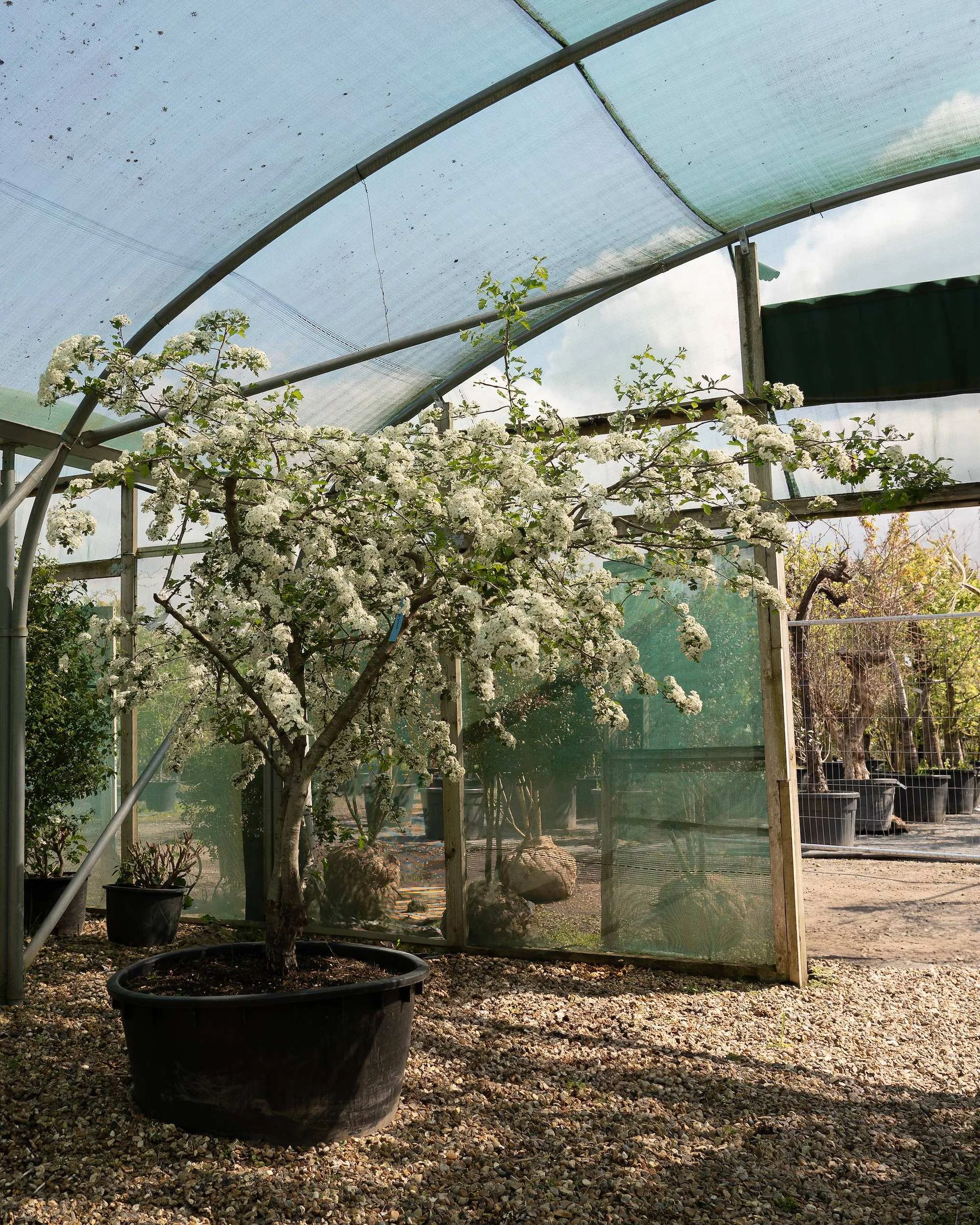
Multi-stem Trees
Crataegus monogyna
Common hawthorn
Frothy white May blossom, glossy red haws and a gnarled, characterful outline. A multi-stem Crataegus monogyna brings the romance of the English countryside into the garden.
Scented white blossom in late spring
Deep red haws in autumn, a feast for birds
Native, and outstanding for wildlife
Extremely tough and adaptable
Please check before you visit. Our nursery is very well stocked, but what we hold changes with the seasons, so this plant may not always be in stock. Enquire before you head over and we will check availability and the sizes we have for you.
At a glance
Type
Multi-stem tree
Foliage
Deciduous
Seasons of interest
Spring blossom, autumn berries, winter silhouette
Eventual size
Typically 4 to 8 m tall
Position
Full sun or partial shade, including exposed sites
Soil
Almost any soil
Hardiness
Fully hardy in the UK
Available
A range of sizes and forms. Ask our team for current specimens and pricing.
Why we love it
Crataegus monogyna is a true icon of the British countryside. In May it is smothered in clusters of white blossom, the traditional May flower, softly scented and buzzing with bees. Through summer the small, lobed leaves form a dense green canopy, and in autumn the branches are laden with glossy crimson haws that feed birds well into winter. Once the leaves have gone, its twisting, thorny branches make a characterful winter silhouette.
As a multi-stem hawthorn develops a gnarled, sculptural shape with several trunks and a rounded, compact crown, looking like an old tree long before its time. It is incredibly tough, coping with wind, exposure and almost any soil, and garden designers love it for bringing a sense of place and deep-rooted heritage to naturalistic and country gardens.
Choosing a size
Multi-stem trees are chosen by height and by spread, and with hawthorn the character of the stems is a large part of the appeal. A younger tree establishes quickly and will soon flower, while a more mature specimen brings gnarled, twisting stems and a finished look from day one. Every tree is unique, so we encourage you to choose by eye.
How to use it
Plant a single hawthorn as a feature in a lawn, meadow or wildlife garden, or use several along a boundary for a beautiful, informal screen. It sits naturally with field maple, hazel, crab apple and wild roses, and looks wonderful rising from long grass, cow parsley, ox-eye daisies and spring bulbs. It is also one of the best trees for exposed and coastal gardens.
Planting
Plant root-balled trees between November and March, and pot-grown trees at any time of year if kept watered. Dig a hole two to three times as wide as the root ball and no deeper, set the top of the root ball level with the soil, and stake the tree, particularly on windy sites. Water thoroughly and mulch with peat-free compost. Wear stout gloves, as the thorns are sharp.
Looking after it
Water deeply in dry spells for the first two summers; after that hawthorn is extremely resilient. Pruning is rarely needed, but you can shape the crown or remove crossing branches in winter. Avoid cutting hedgerow-style plantings in spring and early summer while birds are nesting. It grows in almost any soil, from heavy clay to thin chalk.
Is hawthorn native to the UK?
Yes, Crataegus monogyna is native throughout the UK and has been part of the landscape for thousands of years. It is one of our most valuable trees for wildlife, supporting hundreds of insect species, providing nectar for pollinators in spring, and offering safe nesting sites and autumn berries for birds.
See it in person
Every plant at Form is hand-selected, none contains new peat, and nothing beats choosing yours by eye. Visit our Row Town showroom in Surrey, just 30 minutes from London, where our team will show you the best of what is on the nursery right now. We deliver across London, Surrey and the Home Counties, and nationwide.
Walk in any time during opening hours and you will be looked after. If you would like dedicated time with a specialist, book a Genus Bar appointment.

Frequently asked questions
-
Common hawthorn typically reaches 4 to 8m tall with a rounded crown, and it is easy to keep smaller with pruning.
-
It flowers in May, which is why it is often called May blossom. The display usually lasts two to three weeks.
-
The flesh of the haws is edible when cooked and is often made into jellies and sauces, but the seeds contain compounds that should not be eaten, so avoid swallowing them.
-
It grows at a moderate rate, usually 30 to 50cm a year once established.
-
Yes, it is one of the toughest trees for exposed and coastal sites, coping well with strong winds and salt spray.
-
It is one of the very best. Bees visit the blossom, many insects feed on the foliage, and birds eat the haws and nest in the thorny branches.
-
It grows in full sun or partial shade, though flowering and berrying are heaviest in sun.
-
Both are native hawthorns. Crataegus monogyna has more deeply lobed leaves and one seed per berry, while Crataegus laevigata, the Midland hawthorn, has shallower lobes, usually two seeds per berry and prefers shadier spots.
-
We keep a very well-stocked nursery, but our stock changes with the seasons, so availability varies. Please email us before you visit and we will check what we have and the sizes available.
-
Yes, and we would love you to. Every multi-stem tree is individual, with its own branch structure and character, so we always encourage customers to choose by eye. Our largest specimens are held at our Row Town showroom in Surrey. Walk in any time during opening hours, or book a Genus Bar appointment with one of our specialists. If you can’t visit, we are happy to send photographs of individual trees.
-
Yes, we deliver nationwide. Deliveries are arranged by our dedicated in-house operations team, and larger specimens can be offloaded by HI-AB or Moffett where needed. We will always agree the most suitable option with you before delivery.
All our multi-stem trees
Explore every tree in our multi-stem trees collection, or view them all with photographs →
Crataegus monogyna
Can’t see what you’re looking for?
Get in touch and we’ll help you find it. Our nursery is very well stocked and we can source almost any plant through our network of trusted growers. Email info@formplants.com, or send us your whole plant list through our bespoke sourcing service.