
Multi-stem Trees
Cercidiphyllum japonicum
Katsura tree
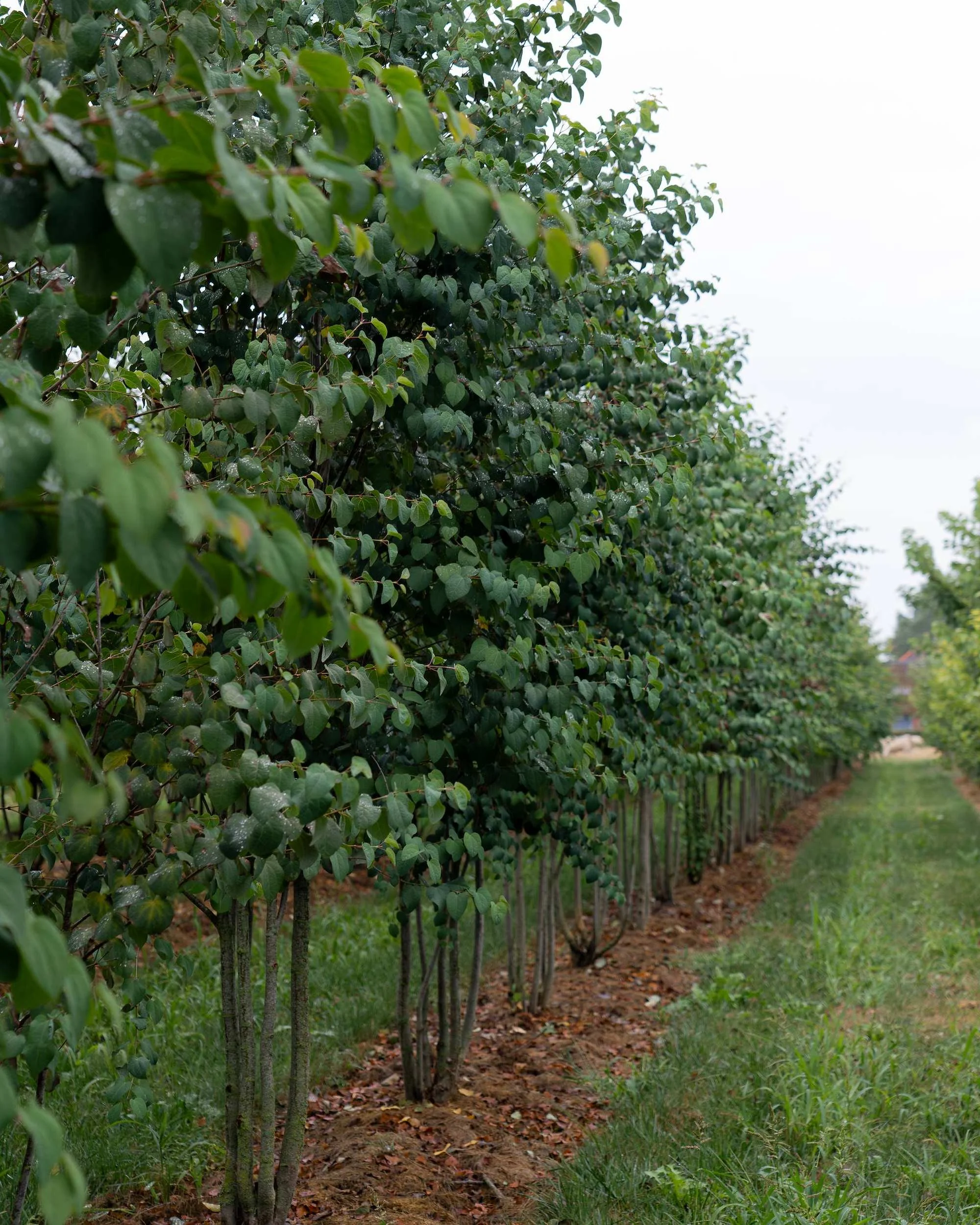
Heart-shaped leaves that turn pink, gold and apricot in autumn, and smell of burnt sugar as they fall. Cercidiphyllum japonicum is a tree to enjoy with every sense.
Heart-shaped, blue-green leaves
Pink, apricot and gold autumn colour
Caramel scent from falling autumn leaves
Graceful, rounded habit
Please check before you visit. Our nursery is very well stocked, but what we hold changes with the seasons, so this plant may not always be in stock. Enquire before you head over and we will check availability and the sizes we have for you.
At a glance
Type
Multi-stem tree
Foliage
Deciduous
Seasons of interest
Spring foliage, autumn colour and scent
Eventual size
Typically 8 to 12 m tall in time
Position
Full sun or partial shade, sheltered
Soil
Moist but well-drained, ideally neutral to acid
Hardiness
Fully hardy in the UK
Available
A range of sizes and forms. Ask our team for current specimens and pricing.
Why we love it
Cercidiphyllum japonicum is a tree for all the senses. In spring its rounded, heart-shaped leaves unfurl in shades of bronze and soft purple, maturing to a fresh blue-green in summer. Then in autumn comes the show it is famous for: the foliage turns butter yellow, apricot, pink and red, and as the leaves fall and dry they release a sweet scent of burnt sugar and caramel that drifts across the garden.
As a multi-stem the katsura tree develops a graceful, rounded shape with several slender trunks and a soft, layered canopy. The leaves flutter in the slightest breeze, giving it a gentle, airy feel. Garden designers love it for woodland and naturalistic gardens, and it is one of those trees that visitors always ask about once they have caught the scent.
Choosing a size
Multi-stem trees are sold by height and by spread. Katsura grows steadily into a large tree in time, so a younger specimen suits gardens where you want to watch it develop, while a more mature tree gives you instant presence and autumn colour from the first year. Every tree has its own shape, so choosing by eye at the nursery is the best way to find the right one.
How to use it
Plant it close to a path, terrace or seating area so you can enjoy the autumn scent, ideally in a sheltered spot with a little afternoon shade. It suits woodland gardens and larger borders, underplanted with ferns, hostas, Anemone × hybrida and spring bulbs, and looks lovely alongside Japanese maples and Amelanchier. Its rounded leaves also make a soft contrast with grasses and strappy foliage.
Planting
Plant root-balled trees between November and March, and pot-grown trees at any time of year if they are kept well watered. Choose a sheltered position away from frost pockets, as late frosts can damage the new spring leaves. Dig a hole two to three times as wide as the root ball and no deeper, stake the tree securely, water well and mulch generously with peat-free compost or leaf mould.
Looking after it
Katsura dislikes drying out, so water deeply and regularly in dry weather for the first two summers and keep a mulch over the roots. Once established it is low maintenance. Pruning is rarely needed; remove any dead or crossing branches in late winter. It grows best in moist but well-drained, neutral to acid soil, where the autumn colour is at its richest.
Why does the katsura tree smell of caramel?
As the leaves change colour and fall in autumn, they produce a natural compound called maltol, the same aroma found in caramelised sugar and candyfloss. The scent is strongest on damp days and among freshly fallen leaves, and a single tree can perfume a whole corner of the garden for several weeks.
See it in person
Every plant at Form is hand-selected, none contains new peat, and nothing beats choosing yours by eye. Visit our Row Town showroom in Surrey, just 30 minutes from London, where our team will show you the best of what is on the nursery right now. We deliver across London, Surrey and the Home Counties, and nationwide.
Walk in any time during opening hours and you will be looked after. If you would like dedicated time with a specialist, book a Genus Bar appointment.

Frequently asked questions
-
Cercidiphyllum japonicum typically reaches 8 to 12m tall in time, with a rounded, spreading crown as a multi-stem.
-
It grows at a moderate rate, usually 30 to 50cm a year once established in moist soil.
-
Autumn colour usually develops in October, with yellow, apricot, pink and red tones, and the caramel scent follows as the leaves fall.
-
Katsura can drop leaves early during hot, dry spells, as it dislikes drought. Deep watering and a thick mulch help it stay in leaf until autumn.
-
It will grow on neutral to slightly alkaline soils if they are moist and fertile, but autumn colour is best on neutral to acid soil.
-
It grows well in full sun or partial shade. Light shade in the afternoon helps protect the leaves in hot weather.
-
It is native to Japan and China, where it can become a very large forest tree.
-
Yes, it is fully hardy. The only vulnerability is new spring growth, which can be caught by late frosts, so avoid planting in frost pockets.
-
We keep a very well-stocked nursery, but our stock changes with the seasons, so availability varies. Please email us before you visit and we will check what we have and the sizes available.
-
Yes, and we would love you to. Every multi-stem tree is individual, with its own branch structure and character, so we always encourage customers to choose by eye. Our largest specimens are held at our Row Town showroom in Surrey. Walk in any time during opening hours, or book a Genus Bar appointment with one of our specialists. If you can’t visit, we are happy to send photographs of individual trees.
-
Yes, we deliver nationwide. Deliveries are arranged by our dedicated in-house operations team, and larger specimens can be offloaded by HI-AB or Moffett where needed. We will always agree the most suitable option with you before delivery.
All our multi-stem trees
Explore every tree in our multi-stem trees collection, or view them all with photographs →
Cercidiphyllum japonicum
Can’t see what you’re looking for?
Get in touch and we’ll help you find it. Our nursery is very well stocked and we can source almost any plant through our network of trusted growers. Email info@formplants.com, or send us your whole plant list through our bespoke sourcing service.