
Multi-stem Trees
Carpinus betulus
Hornbeam
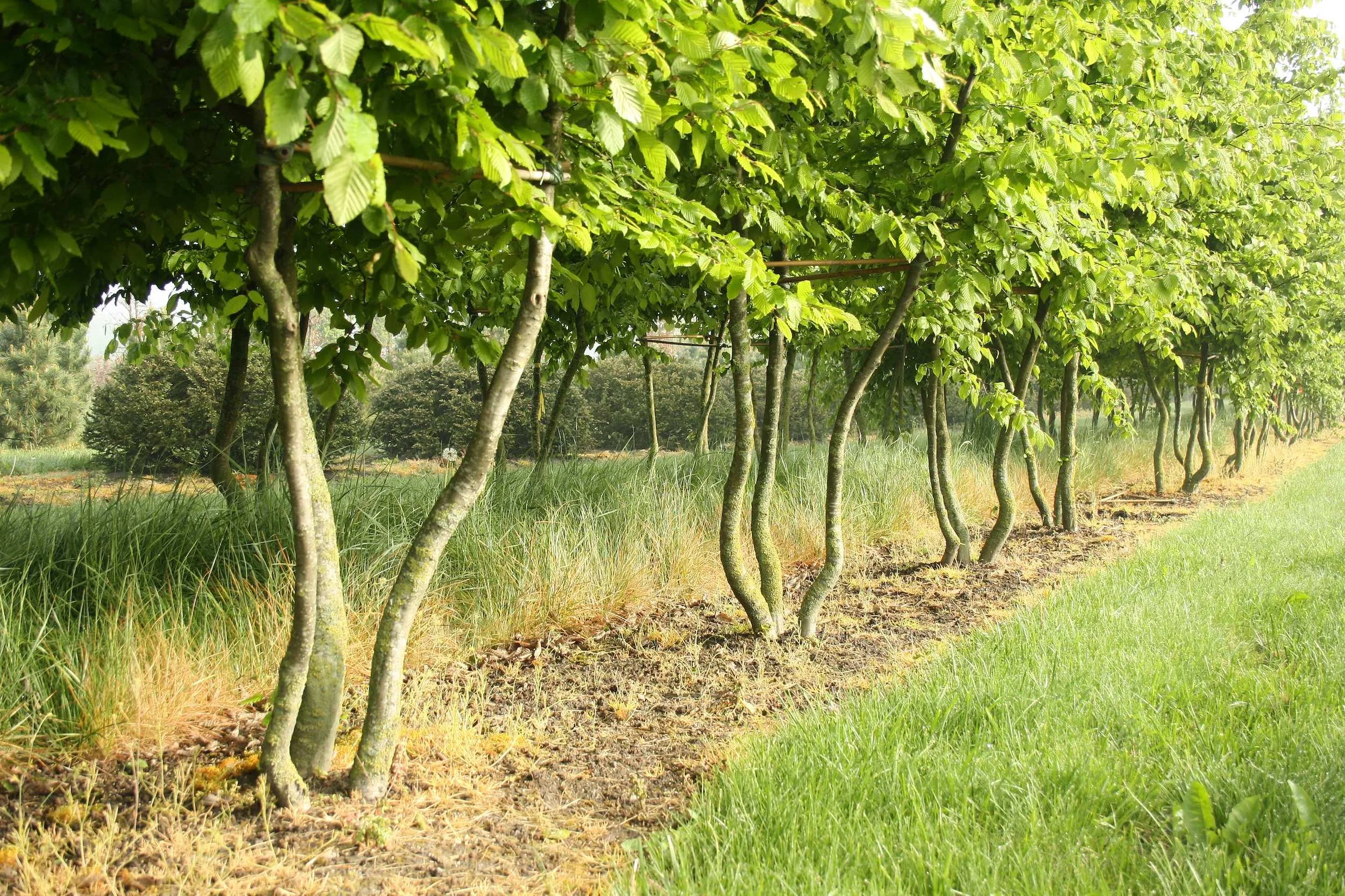
Tough, elegant and beautifully textured, a multi-stem Carpinus betulus brings fluted grey stems, fresh pleated leaves and golden autumn colour to the garden.
Smooth, fluted grey stems
Fresh, pleated green leaves
Golden-yellow autumn colour
Thrives on heavy clay and in exposed sites
Please check before you visit. Our nursery is very well stocked, but what we hold changes with the seasons, so this plant may not always be in stock. Enquire before you head over and we will check availability and the sizes we have for you.
At a glance
Type
Multi-stem tree
Foliage
Deciduous
Seasons of interest
Spring and summer foliage, autumn colour, winter stems
Eventual size
Typically 8 to 12 m tall
Position
Full sun or partial shade
Soil
Most soils, including heavy clay
Hardiness
Fully hardy in the UK
Available
A range of sizes and forms. Ask our team for current specimens and pricing.
Why we love it
Carpinus betulus is a tree of quiet strength. In spring it bursts into fresh, bright green leaves with neatly pleated, toothed edges, and hanging catkins appear alongside them. Through summer the canopy is full and green, clusters of papery winged seeds dangle beneath the leaves, and in autumn the foliage turns warm yellow and soft orange before falling to reveal the stems.
Those stems are one of the great joys of a multi-stem hornbeam. The smooth, silver-grey bark is subtly fluted, almost muscular, and several trunks together have a sculptural quality that looks wonderful in winter light. Hornbeam is tough, reliable and unfussy about soil, and garden designers use it for everything from formal schemes to woodland planting because it always looks composed.
Choosing a size
Multi-stem trees are sold by height and by spread. Hornbeam settles in well at most sizes, so a younger tree is a sound choice for a scheme you want to grow into, while a larger specimen with well-developed, fluted stems gives a finished feature from the start. The spacing and balance of the stems vary from tree to tree, so it is well worth choosing yours by eye at the nursery.
How to use it
Use a multi-stem hornbeam as a feature in a lawn or gravel garden, plant a group to create a small grove, or set a row along a boundary for a soft, natural screen. It sits beautifully with ferns, Luzula, Geranium and woodland bulbs, and pairs well with clipped hornbeam or beech hedging for a cohesive, layered look. It also copes with urban conditions and makes a good choice for town gardens.
Planting
Plant root-balled trees between November and March, and pot-grown trees at any time of year if you keep them watered. Dig a hole two to three times as wide as the root ball but no deeper, set the top of the root ball level with the soil, and stake or guy the tree so the roots can establish undisturbed. Water well after planting and mulch with peat-free compost or bark.
Looking after it
Water deeply once a week in dry weather for the first two summers. A multi-stem hornbeam needs little pruning: remove any dead, crossing or damaged stems and lift the crown if needed while the tree is dormant in winter. If you want to keep it more tightly shaped, it responds well to a trim in late summer. It grows in almost any soil and is particularly good on heavy clay.
Does hornbeam keep its leaves in winter?
Young hornbeams and clipped hedges often hold on to their dry, brown leaves through winter until new growth pushes them off in spring, a habit known as marcescence. Mature, freely grown trees usually drop most of their leaves in autumn, though a multi-stem may keep some on its lower branches, which adds a warm, coppery tone to the winter garden.
See it in person
Every plant at Form is hand-selected, none contains new peat, and nothing beats choosing yours by eye. Visit our Row Town showroom in Surrey, just 30 minutes from London, where our team will show you the best of what is on the nursery right now. We deliver across London, Surrey and the Home Counties, and nationwide.
Walk in any time during opening hours and you will be looked after. If you would like dedicated time with a specialist, book a Genus Bar appointment.

Frequently asked questions
-
A multi-stem hornbeam typically reaches 8 to 12m tall over many years, with a broad, rounded crown. It takes pruning very well, so it is easy to keep smaller.
-
It is a moderate grower, usually adding 30 to 60cm a year once established.
-
Yes, Carpinus betulus is native to south-east England and has been planted widely across the country for centuries.
-
Yes, it is one of the best trees for heavy clay and also does well on chalk and most other soils.
-
Hornbeam grows well in full sun or partial shade and tolerates more shade than many trees, which makes it useful under taller trees or beside buildings.
-
Hornbeam leaves are ribbed with toothed edges, while beech leaves are smoother and glossier with wavy edges. Hornbeam is also better suited to heavy, wet clay, whereas beech prefers free-draining soil.
-
Yes, its foliage supports many insects and moths, and birds such as finches feed on the seeds in autumn and winter.
-
Hornbeam responds beautifully to shaping, so a multi-stem can be crown-lifted, thinned or lightly clipped to suit a more formal design.
-
We keep a very well-stocked nursery, but our stock changes with the seasons, so availability varies. Please email us before you visit and we will check what we have and the sizes available.
-
Yes, and we would love you to. Every multi-stem tree is individual, with its own branch structure and character, so we always encourage customers to choose by eye. Our largest specimens are held at our Row Town showroom in Surrey. Walk in any time during opening hours, or book a Genus Bar appointment with one of our specialists. If you can’t visit, we are happy to send photographs of individual trees.
-
Yes, we deliver nationwide. Deliveries are arranged by our dedicated in-house operations team, and larger specimens can be offloaded by HI-AB or Moffett where needed. We will always agree the most suitable option with you before delivery.
All our multi-stem trees
Explore every tree in our multi-stem trees collection, or view them all with photographs →
Carpinus betulus
Can’t see what you’re looking for?
Get in touch and we’ll help you find it. Our nursery is very well stocked and we can source almost any plant through our network of trusted growers. Email info@formplants.com, or send us your whole plant list through our bespoke sourcing service.