
Multi-stem Trees
Gleditsia triacanthos var. inermis
Thornless honey locust
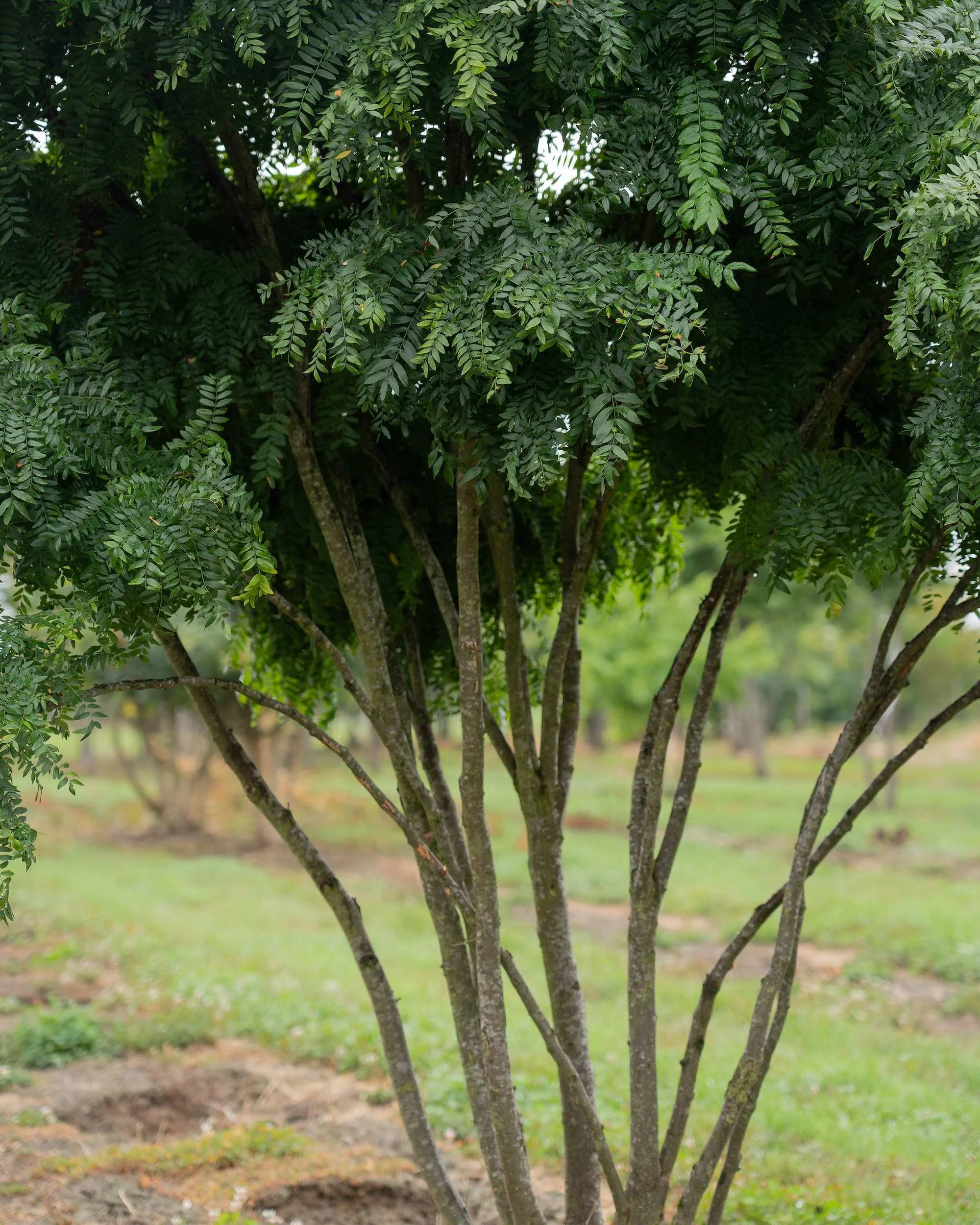
Fine, feathery leaves casting light shade, with golden autumn colour. A thornless honey locust that thrives in heat and drought.
Fine, feathery foliage
Light, dappled shade
Golden autumn colour
Tolerant of heat and drought
Please check before you visit. Our nursery is very well stocked, but what we hold changes with the seasons, so this plant may not always be in stock. Enquire before you head over and we will check availability and the sizes we have for you.
At a glance
Type
Multi-stem tree
Foliage
Deciduous
Seasons of interest
Summer foliage, autumn colour
Eventual size
Typically 10 to 15 m tall
Position
Full sun
Soil
Most well-drained soils
Hardiness
Fully hardy in the UK
Available
A range of sizes and forms. Ask our team for current specimens and pricing.
Why we love it
Gleditsia triacanthos var. inermis brings a lightness to the garden that few trees can match. Its fine, feathery leaves are made up of many small leaflets, creating a delicate, fern-like canopy that moves in the breeze and lets dappled light through to the ground below. The foliage is fresh green through summer, and in autumn it turns a clear, golden yellow before falling.
As a multi-stem the thornless honey locust forms an open, spreading tree with several elegant trunks and an airy, layered crown. It comes into leaf late in spring, letting sunlight reach plants beneath for longer, and its small leaflets break down quickly when they fall, so there is little to clear. Garden designers love it for creating light shade over terraces and planting.
Choosing a size
Multi-stem trees are sold by height and by spread. Honey locust grows fairly quickly, so a younger tree soon develops its spreading canopy, while a larger specimen gives you dappled shade and an established look from the first summer. Every tree branches differently, so it is well worth choosing yours by eye at the nursery.
How to use it
Plant it to cast light shade over a seating area, terrace or courtyard, or as a feature in a lawn. Because its canopy is so open, you can plant sun-loving perennials and grasses close beneath it: try Salvia, Nepeta, Echinacea and Calamagrostis. It copes with heat, drought and pollution, making it a reliable choice for urban gardens and contemporary schemes, and it works well planted in a group to shade a larger terrace.
Planting
Plant root-balled trees between November and March, and pot-grown trees at any time of year if kept watered. Choose a sunny spot, ideally sheltered from strong winds, which can break the brittle young shoots. Dig a hole two to three times as wide as the root ball and no deeper, set it level with the soil, stake it, water well and mulch with peat-free compost.
Looking after it
Water deeply in dry spells for the first two summers; once established it is very drought tolerant. Prune in late summer or autumn to remove crossing or damaged branches and lift the crown if needed, avoiding late winter and spring when cuts can bleed. It grows in most well-drained soils and is happiest in full sun. A spring mulch of peat-free compost helps young trees through their first dry summers.
Does honey locust have thorns?
The wild honey locust is known for its large, branched thorns on the trunk and stems, but Gleditsia triacanthos var. inermis is the thornless form, with inermis meaning unarmed. That makes it a safe, comfortable choice for gardens, terraces and family spaces where people will be close to the tree.
See it in person
Every plant at Form is hand-selected, none contains new peat, and nothing beats choosing yours by eye. Visit our Row Town showroom in Surrey, just 30 minutes from London, where our team will show you the best of what is on the nursery right now. We deliver across London, Surrey and the Home Counties, and nationwide.
Walk in any time during opening hours and you will be looked after. If you would like dedicated time with a specialist, book a Genus Bar appointment.

Frequently asked questions
-
It typically reaches 10 to 15m tall with a broad, open crown over many years, though it can be crown-thinned to keep it in proportion.
-
It grows fairly quickly, often 40 to 60cm a year once established.
-
It is one of the later trees to leaf up, usually in May, which allows more spring light to reach plants beneath it.
-
Yes, its fine, open canopy casts only light, dappled shade, so many sun-loving perennials and grasses grow well beneath it.
-
It is hardy, but the young branches can be brittle, so a spot with some shelter from strong winds is best.
-
Var. inermis has green summer foliage and grows larger, while 'Sunburst' has golden yellow young leaves and is smaller and slower growing.
-
Yes, the feathery leaves turn a clear, golden yellow in autumn before falling.
-
Yes, once established it copes very well with dry summers, heat and urban conditions.
-
We keep a very well-stocked nursery, but our stock changes with the seasons, so availability varies. Please email us before you visit and we will check what we have and the sizes available.
-
Yes, and we would love you to. Every multi-stem tree is individual, with its own branch structure and character, so we always encourage customers to choose by eye. Our largest specimens are held at our Row Town showroom in Surrey. Walk in any time during opening hours, or book a Genus Bar appointment with one of our specialists. If you can’t visit, we are happy to send photographs of individual trees.
-
Yes, we deliver nationwide. Deliveries are arranged by our dedicated in-house operations team, and larger specimens can be offloaded by HI-AB or Moffett where needed. We will always agree the most suitable option with you before delivery.
All our multi-stem trees
Explore every tree in our multi-stem trees collection, or view them all with photographs →
Gleditsia triacanthos var. inermis
Can’t see what you’re looking for?
Get in touch and we’ll help you find it. Our nursery is very well stocked and we can source almost any plant through our network of trusted growers. Email info@formplants.com, or send us your whole plant list through our bespoke sourcing service.