
Multi-stem Trees
Mespilus germanica
Medlar
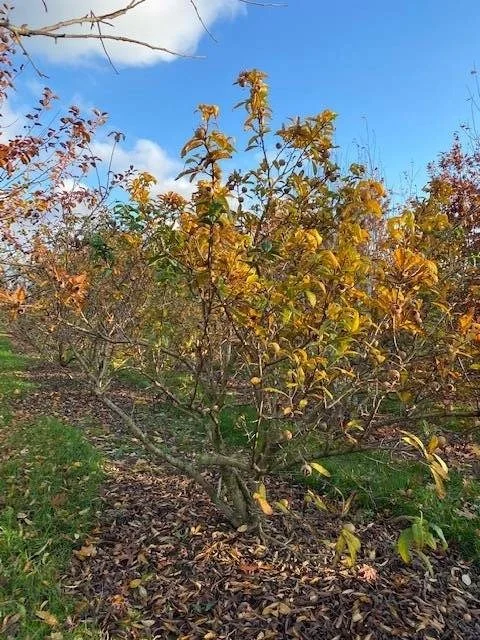
Gnarled, spreading and full of old-world charm, Mespilus germanica offers large white spring flowers, curious russet fruits and warm autumn colour.
Large, single white flowers in late spring
Distinctive russet fruits in autumn
Characterful, spreading habit
Warm autumn tones
Please check before you visit. Our nursery is very well stocked, but what we hold changes with the seasons, so this plant may not always be in stock. Enquire before you head over and we will check availability and the sizes we have for you.
At a glance
Type
Multi-stem tree
Foliage
Deciduous
Seasons of interest
Spring flowers, autumn fruit and colour
Eventual size
Typically 4 to 8 m tall
Position
Full sun
Soil
Most well-drained soils
Hardiness
Fully hardy in the UK
Available
A range of sizes and forms. Ask our team for current specimens and pricing.
Why we love it
The medlar, Mespilus germanica, is a tree full of character and history. In late spring it opens large, single white flowers, each sitting alone at the tip of a shoot like a wild rose, set against big, slightly downy leaves. By autumn the curious russet-brown fruits have formed, each with an open, crown-like end, and the foliage turns glorious shades of yellow, amber and russet before it falls.
Grown as a multi-stem, the medlar becomes a wonderfully sculptural small tree, with a wide, spreading crown and gnarled, twisting branches that give it the look of an old orchard tree even when young. It has been grown in Britain for many centuries and was a favourite in medieval and Tudor gardens. Today, designers love it for productive and kitchen gardens, where it is as beautiful as it is useful.
Choosing a size
Multi-stem medlars are sold by height and spread. A smaller tree suits a kitchen garden, a border or a large pot and will soon start to fruit, while a larger specimen brings an instant sense of age, with an established, spreading framework. Because the branching is so individual, it really is worth coming to choose your tree by eye.
How to use it
Plant a medlar as the centrepiece of a kitchen or potager garden, in a small orchard alongside apples and quinces, or as a feature tree in a lawn where its spreading shape can be appreciated. It suits naturalistic planting, underplanted with spring bulbs and wildflowers, and looks lovely beside a bench or seating area, where you can enjoy the flowers up close.
Planting
Plant root-balled trees between November and March, and pot-grown trees year-round if you can water them in dry weather. Choose a sunny spot. Dig a hole two to three times the width of the root ball but no deeper, keep the root ball level with the surrounding soil, stake the tree and backfill. Water thoroughly and mulch with peat-free compost.
Looking after it
Water deeply during dry spells for the first two summers. Medlars need little pruning: in winter, while dormant, remove dead, damaged or crossing branches and any that crowd the centre. It flowers and fruits on short spurs and shoot tips, so avoid cutting back all the young growth. It grows in most well-drained soils and appreciates a sheltered, sunny position.
How do you eat medlars?
Medlars are picked in late autumn while still hard, then left to soften, or blet, until the flesh turns brown and soft, which can take a few weeks in a cool place. Once bletted, the flesh has a rich flavour likened to dates and spiced apple. It can be scooped out and eaten, or made into medlar jelly or cheese.
See it in person
Every plant at Form is hand-selected, none contains new peat, and nothing beats choosing yours by eye. Visit our Row Town showroom in Surrey, just 30 minutes from London, where our team will show you the best of what is on the nursery right now. We deliver across London, Surrey and the Home Counties, and nationwide.
Walk in any time during opening hours and you will be looked after. If you would like dedicated time with a specialist, book a Genus Bar appointment.

Frequently asked questions
-
A medlar typically grows 4 to 8m tall with a broad, spreading crown that is often as wide as it is tall.
-
It flowers in late spring, usually May to early June, with large, single white blossoms.
-
Medlars are picked in late autumn, usually October to November, while still firm, and then bletted indoors or left on the tree to soften after frost.
-
Yes, medlars are self-fertile, so a single tree will produce fruit without needing a partner.
-
Yes, the large leaves turn warm yellow, orange and russet in autumn before they fall.
-
Medlars grow at a slow to moderate rate, usually around 20 to 30cm a year once established.
-
Yes, a smaller tree can be grown for many years in a large container of peat-free, loam-based compost. Water regularly and feed in spring.
-
No, the medlar originates from south-west Asia and south-east Europe, but it has been grown in British gardens for many centuries.
-
We keep a very well-stocked nursery, but our stock changes with the seasons, so availability varies. Please email us before you visit and we will check what we have and the sizes available.
-
Yes, and we would love you to. Every multi-stem tree is individual, with its own branch structure and character, so we always encourage customers to choose by eye. Our largest specimens are held at our Row Town showroom in Surrey. Walk in any time during opening hours, or book a Genus Bar appointment with one of our specialists. If you can’t visit, we are happy to send photographs of individual trees.
-
Yes, we deliver nationwide. Deliveries are arranged by our dedicated in-house operations team, and larger specimens can be offloaded by HI-AB or Moffett where needed. We will always agree the most suitable option with you before delivery.
All our multi-stem trees
Explore every tree in our multi-stem trees collection, or view them all with photographs →
Mespilus germanica
Can’t see what you’re looking for?
Get in touch and we’ll help you find it. Our nursery is very well stocked and we can source almost any plant through our network of trusted growers. Email info@formplants.com, or send us your whole plant list through our bespoke sourcing service.