
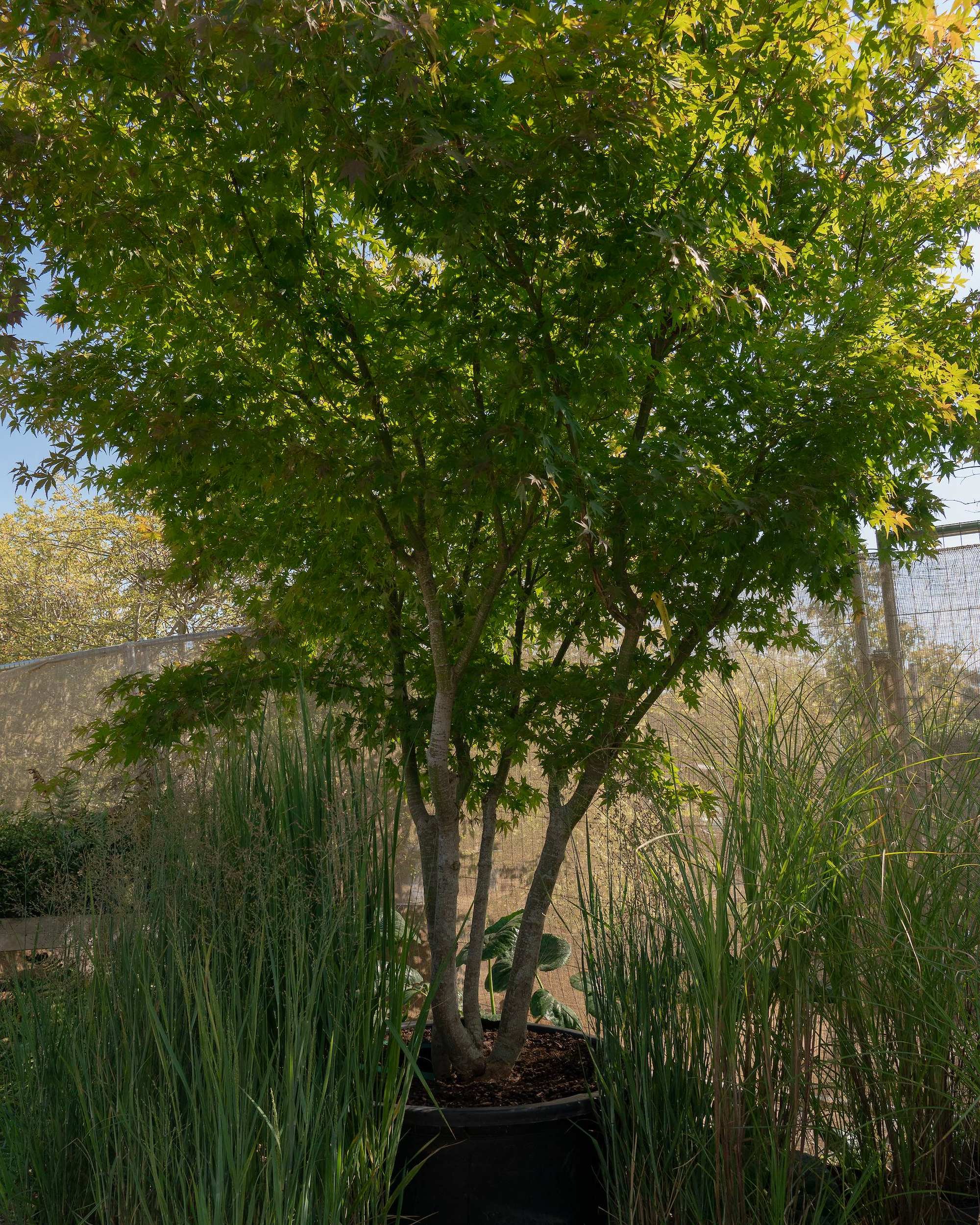
Multi-stem Trees
Acer palmatum
Japanese maple
Delicate, finely cut leaves, a graceful layered habit and glorious autumn colour. A multi-stem Acer palmatum brings quiet elegance to any garden.
Finely divided, elegant leaves
Brilliant red and orange autumn colour
Graceful, layered branching
Perfect for courtyards and smaller gardens
Please check before you visit. Our nursery is very well stocked, but what we hold changes with the seasons, so this plant may not always be in stock. Enquire before you head over and we will check availability and the sizes we have for you.
At a glance
Type
Multi-stem tree
Foliage
Deciduous
Seasons of interest
Spring foliage, autumn colour, winter outline
Eventual size
Typically 3 to 6 m tall
Position
Partial shade, sheltered from cold winds
Soil
Moist but well-drained, ideally neutral to acid
Hardiness
Fully hardy in the UK
Available
A range of sizes and forms. Ask our team for current specimens and pricing.
Why we love it
There is something quietly magical about Acer palmatum. In spring the delicate, hand-shaped leaves unfold in soft greens, often edged with red, and the tree has a fresh, almost luminous quality. Through summer the foliage forms a light, layered canopy, and in autumn it turns fiery shades of orange, red and gold. Once the leaves fall, the fine, twiggy branches create a graceful winter outline.
As a multi-stem the Japanese maple develops a wide, gently layered habit with several slender trunks, which gives it the look of a mature garden tree even in a small space. It brings calm, texture and movement to a planting scheme, and garden designers use it to add refinement to everything from contemporary courtyards to woodland gardens.
Choosing a size
Multi-stem Japanese maples are chosen by height and by spread, and their character comes as much from the arrangement of the stems and the layering of the branches as from their size. Smaller trees are perfect for pots and intimate spaces, while larger specimens bring an instant sense of maturity. No two are alike, so we always recommend choosing yours by eye at the nursery.
How to use it
A Japanese maple makes a beautiful focal point in a courtyard, beside water, or at the heart of a shady border. It sits naturally with ferns, Hakonechloa, Hosta and moss, and looks lovely set against a dark backdrop of yew or a painted wall. Grown in a large container it can bring a sense of a garden to a terrace or roof space, as long as it is sheltered from strong wind.
Planting
Plant root-balled trees between November and March, and pot-grown trees at any time of year, avoiding hot, dry spells. Choose a sheltered spot out of cold winds and the harshest afternoon sun. Dig a hole two to three times as wide as the root ball and no deeper, set the tree at the same level it was growing, and stake if needed. Water thoroughly and mulch with peat-free compost or leaf mould to keep the roots cool and moist.
Looking after it
Keep the soil moist through the first two summers, watering deeply rather than little and often. Japanese maples rarely need pruning; if you want to remove a crossing or awkward branch, do it from late autumn to midwinter while the tree is fully dormant, as maples bleed sap in spring. They prefer moist, well-drained, neutral to acid soil and appreciate a yearly mulch of leaf mould or peat-free compost.
Why are my Japanese maple leaves going brown?
Brown, crispy leaf edges are usually leaf scorch, caused by cold or drying winds, strong afternoon sun or roots drying out. Moving a container to a more sheltered spot, mulching and watering more deeply in dry weather usually solves the problem, and new leaves the following spring will come through fresh and healthy.
See it in person
Every plant at Form is hand-selected, none contains new peat, and nothing beats choosing yours by eye. Visit our Row Town showroom in Surrey, just 30 minutes from London, where our team will show you the best of what is on the nursery right now. We deliver across London, Surrey and the Home Counties, and nationwide.
Walk in any time during opening hours and you will be looked after. If you would like dedicated time with a specialist, book a Genus Bar appointment.
Frequently asked questions
-
Acer palmatum typically grows to 3 to 6m tall and a similar spread over many years. As a multi-stem it tends to be broad and layered rather than tall.
-
It is slow to moderate in growth, usually adding around 20 to 30cm a year once established, which makes it easy to keep in scale.
-
They do best in partial shade. In full sun they can scorch, particularly in dry or windy spots, so a position with morning sun and afternoon shade is ideal.
-
Yes, Japanese maples are among the best trees for containers. Use a large pot with drainage holes and peat-free, loam-based compost, keep it well watered and move it to shelter from strong winds.
-
Autumn colour usually develops from October into early November, turning shades of orange, red and yellow depending on the weather and the individual tree.
-
It prefers neutral to acid soil. On chalky ground it is best grown in a large pot of ericaceous or loam-based compost, or in a bed improved with plenty of leaf mould.
-
Yes, they are fully hardy. The main risks are late spring frosts damaging new leaves and cold winds, so a sheltered position is best.
-
Prune only when needed, between late autumn and midwinter while the tree is fully dormant. This avoids sap bleeding, which happens when maples are cut in spring.
-
We keep a very well-stocked nursery, but our stock changes with the seasons, so availability varies. Please email us before you visit and we will check what we have and the sizes available.
-
Yes, and we would love you to. Every multi-stem tree is individual, with its own branch structure and character, so we always encourage customers to choose by eye. Our largest specimens are held at our Row Town showroom in Surrey. Walk in any time during opening hours, or book a Genus Bar appointment with one of our specialists. If you can’t visit, we are happy to send photographs of individual trees.
-
Yes, we deliver nationwide. Deliveries are arranged by our dedicated in-house operations team, and larger specimens can be offloaded by HI-AB or Moffett where needed. We will always agree the most suitable option with you before delivery.
All our multi-stem trees
Explore every tree in our multi-stem trees collection, or view them all with photographs →
Acer palmatum
Can’t see what you’re looking for?
Get in touch and we’ll help you find it. Our nursery is very well stocked and we can source almost any plant through our network of trusted growers. Email info@formplants.com, or send us your whole plant list through our bespoke sourcing service.