
Multi-stem Trees
Fagus sylvatica
Beech
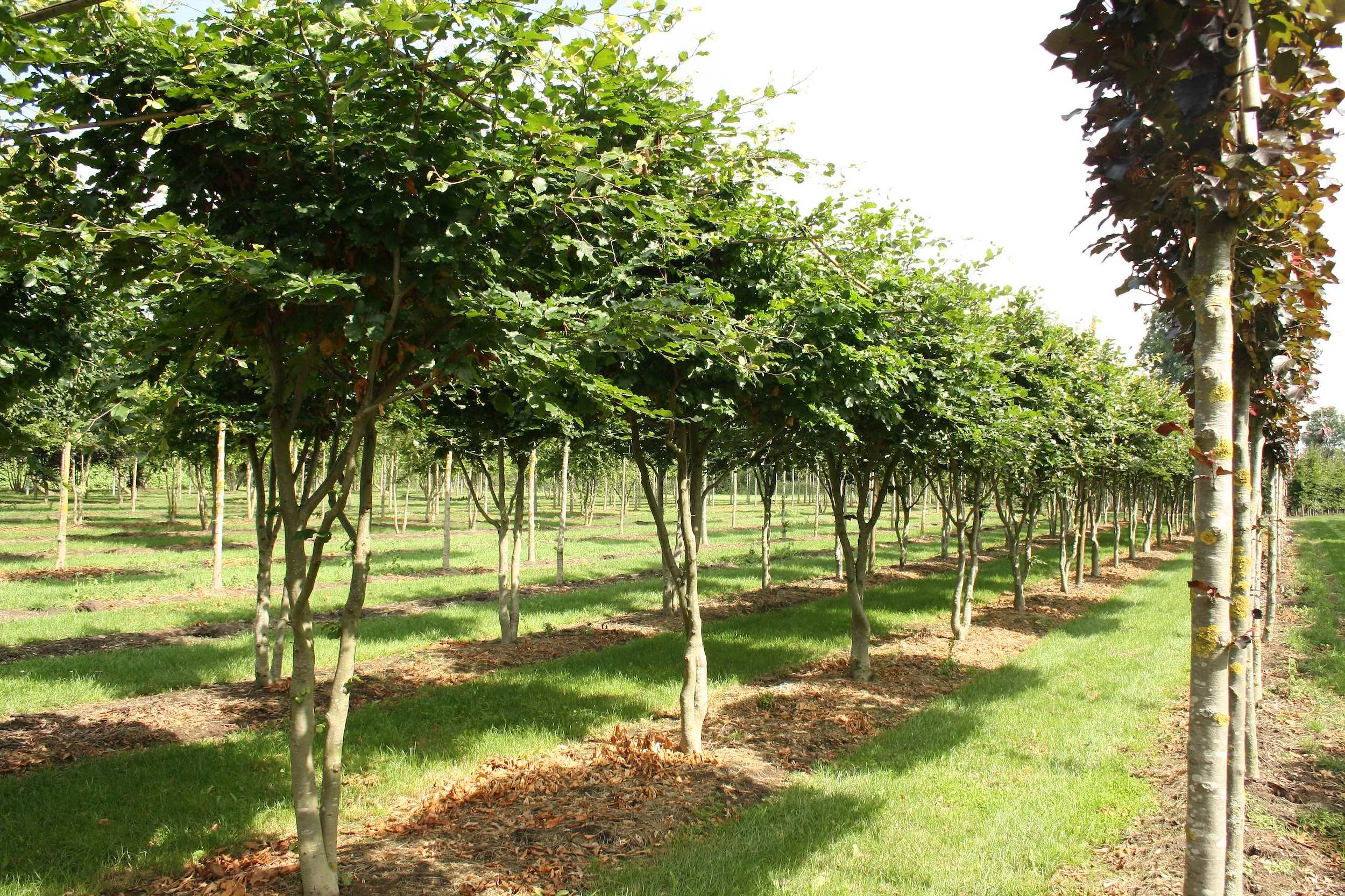
Smooth silver-grey stems, luminous spring leaves and rich copper autumn colour. A multi-stem Fagus sylvatica is a tree of quiet grandeur.
Smooth, silver-grey bark
Bright lime-green spring foliage
Rich copper and gold autumn colour
A noble, long-lived tree
Please check before you visit. Our nursery is very well stocked, but what we hold changes with the seasons, so this plant may not always be in stock. Enquire before you head over and we will check availability and the sizes we have for you.
At a glance
Type
Multi-stem tree
Foliage
Deciduous
Seasons of interest
Spring foliage, autumn colour, winter stems
Eventual size
Typically over 12 m tall in time; can be managed
Position
Full sun or partial shade
Soil
Free-draining, including chalk; avoid wet, heavy ground
Hardiness
Fully hardy in the UK
Available
A range of sizes and forms. Ask our team for current specimens and pricing.
Why we love it
Few moments in the garden compare with Fagus sylvatica coming into leaf. In spring the new leaves unfold a bright, translucent lime green, softly fringed with silky hairs, and the whole tree seems to glow. Through summer they deepen to a rich, glossy green, and in autumn they turn wonderful shades of copper, amber and russet before falling. In winter the smooth, silver-grey bark of the stems stands out beautifully.
As a multi-stem, beech takes on a sculptural, almost architectural quality, with several smooth trunks rising together into a broad, elegant crown. It brings a sense of permanence and calm to a garden, and garden designers use it as a statement tree in larger spaces or keep it pruned and shaped as a living sculpture in smaller ones.
Choosing a size
Multi-stem trees are chosen by height and by spread, and with beech the arrangement of those pale, smooth stems is a big part of the beauty. A younger tree will settle in well and can be shaped as it grows, while a mature specimen gives an immediate sense of scale and structure. Every tree is different, so we recommend coming to the nursery to choose yours by eye.
How to use it
In a large garden, plant it as a specimen in a lawn or at the edge of woodland, where it has room to spread. In smaller spaces, a multi-stem beech can be crown-lifted and pruned to create a sculptural canopy over a seating area or gravel garden. It pairs well with beech or yew hedging, and makes a lovely backdrop for spring bulbs, ferns and woodland perennials.
Planting
Plant root-balled trees between November and March, and pot-grown trees at any time of year if they are kept watered. Choose a spot with free-draining soil, as beech dislikes wet roots. Dig a hole two to three times the width of the root ball and no deeper, set the tree level with the soil, stake it, water thoroughly and mulch with peat-free compost.
Looking after it
Water deeply during dry spells for the first two summers, as young beech can struggle in drought while establishing. Beech has shallow roots, so avoid compacting the soil beneath it. Prune to shape in late summer, or remove larger branches in winter while it is dormant. It thrives on free-draining soils, including chalk, but should not be planted on wet, heavy ground.
Can you keep a beech tree small?
Yes. Beech responds very well to pruning, which is why it is so popular for hedging. A multi-stem beech can be kept to a manageable size for many years by reducing and thinning the crown, with a light trim in late summer to maintain the shape and any larger cuts made in winter. With regular care it will sit happily in a much smaller space than its natural size suggests.
See it in person
Every plant at Form is hand-selected, none contains new peat, and nothing beats choosing yours by eye. Visit our Row Town showroom in Surrey, just 30 minutes from London, where our team will show you the best of what is on the nursery right now. We deliver across London, Surrey and the Home Counties, and nationwide.
Walk in any time during opening hours and you will be looked after. If you would like dedicated time with a specialist, book a Genus Bar appointment.

Frequently asked questions
-
Left to grow freely, Fagus sylvatica can exceed 12m tall in time and eventually become a very large tree, but a multi-stem can be pruned to keep it much smaller.
-
It grows at a moderate rate, usually 30 to 50cm a year once established.
-
Yes, beech is native to southern England and south Wales, where it forms some of our most beautiful woodlands.
-
Beech prefers free-draining soil and dislikes wet, heavy clay. If your soil is heavy, hornbeam is a better choice.
-
Young and clipped beech often holds its dry, copper-brown leaves through winter until new growth appears in spring, while larger, freely grown trees usually drop most of theirs.
-
Yes, beech grows very well on chalk and other free-draining soils.
-
It grows well in full sun or partial shade and is more shade tolerant than many trees.
-
Yes, beech supports a wide range of insects, and in good years its nuts, known as beechmast, feed birds and small mammals.
-
We keep a very well-stocked nursery, but our stock changes with the seasons, so availability varies. Please email us before you visit and we will check what we have and the sizes available.
-
Yes, and we would love you to. Every multi-stem tree is individual, with its own branch structure and character, so we always encourage customers to choose by eye. Our largest specimens are held at our Row Town showroom in Surrey. Walk in any time during opening hours, or book a Genus Bar appointment with one of our specialists. If you can’t visit, we are happy to send photographs of individual trees.
-
Yes, we deliver nationwide. Deliveries are arranged by our dedicated in-house operations team, and larger specimens can be offloaded by HI-AB or Moffett where needed. We will always agree the most suitable option with you before delivery.
All our multi-stem trees
Explore every tree in our multi-stem trees collection, or view them all with photographs →
Fagus sylvatica
Can’t see what you’re looking for?
Get in touch and we’ll help you find it. Our nursery is very well stocked and we can source almost any plant through our network of trusted growers. Email info@formplants.com, or send us your whole plant list through our bespoke sourcing service.