
Multi-stem Trees
Prunus serrula
Tibetan cherry
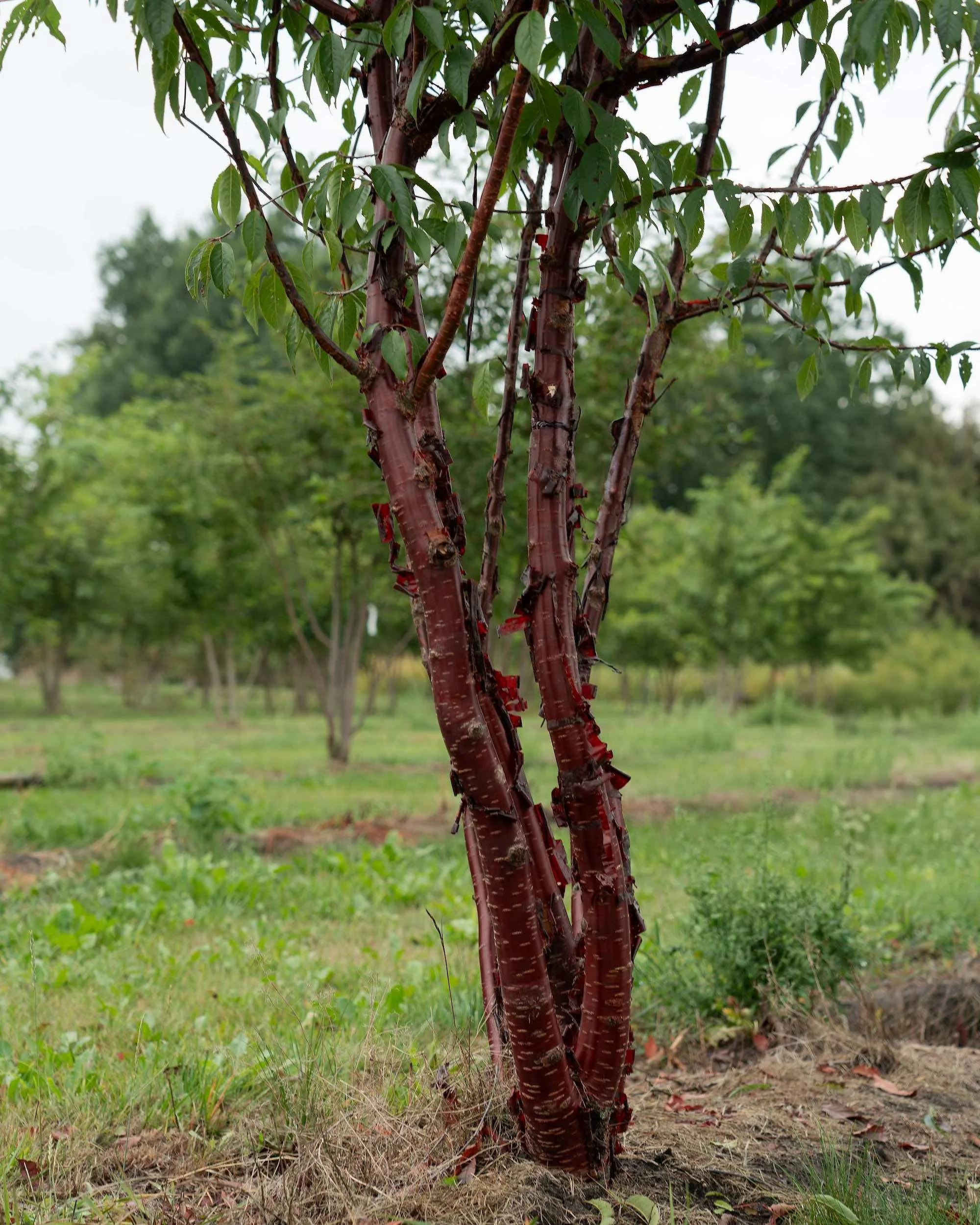
Grown above all for its extraordinary bark, Prunus serrula has stems of polished mahogany-red that peel in fine strips and glow in winter sun. As a multi-stem, it is pure garden jewellery.
Glossy, mahogany-red bark that peels in ribbons
Small white flowers in spring
Neat, compact size for smaller gardens
Spectacular in winter light
Please check before you visit. Our nursery is very well stocked, but what we hold changes with the seasons, so this plant may not always be in stock. Enquire before you head over and we will check availability and the sizes we have for you.
At a glance
Type
Multi-stem tree
Foliage
Deciduous
Seasons of interest
Year-round bark, spring flowers
Eventual size
Typically 4 to 8 m tall
Position
Full sun or partial shade
Soil
Moist but well-drained
Hardiness
Fully hardy in the UK
Available
A range of sizes and forms. Ask our team for current specimens and pricing.
Why we love it
Prunus serrula is grown for one thing above all: its extraordinary bark. The stems are a gleaming, polished mahogany red that peels in thin, papery bands to reveal fresh glossy bark beneath, and they shine like burnished copper in low winter sun. Small white flowers appear with the leaves in spring, the narrow, willow-like foliage turns yellow in autumn, but it is the stems that make people stop and touch.
As a multi-stem the effect is multiplied, with several glowing trunks rising together into a light, open crown. It is a tree that looks its best when the rest of the garden is bare, which makes it invaluable in winter. Designers choose it as a living sculpture, placing it where it will be lit by the sun or by garden lighting after dark.
Choosing a size
Multi-stem trees are chosen by height and spread, but with Prunus serrula it is the stems that matter most. Younger trees have slimmer stems that will develop their rich colour and peeling character over the next few years, while older specimens already have thicker, glossy trunks with that unmistakable sheen. The number, angle and colour of the stems vary from tree to tree, so it really pays to choose by eye.
How to use it
Plant it where the stems will catch low sun from the south or west, beside a path or close to a window where you can enjoy it every day. It is beautiful rising from a carpet of snowdrops, Cyclamen coum and hellebores, or with the white stems of birch and the red twigs of Cornus in a winter garden. Keep the underplanting low so nothing hides the bark.
Planting
Root-balled trees go in between November and March, and pot-grown trees can be planted at any time if watered. Dig a hole wider than the root ball but no deeper, set the tree at the same depth it was growing, and use a low stake or guying system that does not rub the precious bark. Backfill, firm, water deeply and mulch with peat-free compost, keeping it clear of the stems.
Looking after it
Water deeply in dry weather for the first two summers, as it prefers soil that stays moist but drains freely. Prune only in summer, removing low or crossing shoots that clutter the stems; summer cuts heal quickly and reduce the risk of silver leaf. Remove the occasional shoot that sprouts from below the graft, if present.
How do you keep Prunus serrula bark shiny?
The bark has a natural gloss, and the simplest way to keep it gleaming is to rub the stems gently with your hand or a soft cloth now and then, which lifts away loose flakes and grime. Many gardeners do this every time they walk past. Keeping lower branches and climbing weeds off the stems also lets in light and air, so the bark stays clean and bright.
See it in person
Every plant at Form is hand-selected, none contains new peat, and nothing beats choosing yours by eye. Visit our Row Town showroom in Surrey, just 30 minutes from London, where our team will show you the best of what is on the nursery right now. We deliver across London, Surrey and the Home Counties, and nationwide.
Walk in any time during opening hours and you will be looked after. If you would like dedicated time with a specialist, book a Genus Bar appointment.

Frequently asked questions
-
It typically reaches 4 to 8m tall with a similar spread, making it a manageable tree for most gardens.
-
It comes from western China, including regions on the edge of Tibet, which is how it gained its common name.
-
Yes, it has small, single white flowers in spring, usually April to May, which appear with the leaves. They are modest compared with Japanese cherries, as this tree is grown mainly for its bark.
-
Its narrow leaves turn soft yellow in autumn before falling, revealing the bark for winter.
-
It grows at a moderate rate, often 30 to 40cm a year, and the bark becomes richer and glossier as the stems thicken.
-
Yes, its modest size and year-round interest make it one of the best trees for small gardens and courtyards.
-
It is happy in partial shade, but the bark looks most spectacular where it catches some direct sunlight.
-
Both are grown for their bark. Prunus serrula has glossy mahogany red stems and stays smaller, while the Himalayan birch has brilliant white bark and grows taller. They look wonderful planted together.
-
We keep a very well-stocked nursery, but our stock changes with the seasons, so availability varies. Please email us before you visit and we will check what we have and the sizes available.
-
Yes, and we would love you to. Every multi-stem tree is individual, with its own branch structure and character, so we always encourage customers to choose by eye. Our largest specimens are held at our Row Town showroom in Surrey. Walk in any time during opening hours, or book a Genus Bar appointment with one of our specialists. If you can’t visit, we are happy to send photographs of individual trees.
-
Yes, we deliver nationwide. Deliveries are arranged by our dedicated in-house operations team, and larger specimens can be offloaded by HI-AB or Moffett where needed. We will always agree the most suitable option with you before delivery.
All our multi-stem trees
Explore every tree in our multi-stem trees collection, or view them all with photographs →
Prunus serrula
Can’t see what you’re looking for?
Get in touch and we’ll help you find it. Our nursery is very well stocked and we can source almost any plant through our network of trusted growers. Email info@formplants.com, or send us your whole plant list through our bespoke sourcing service.