
Multi-stem Trees
Heptacodium miconioides
Seven son flower
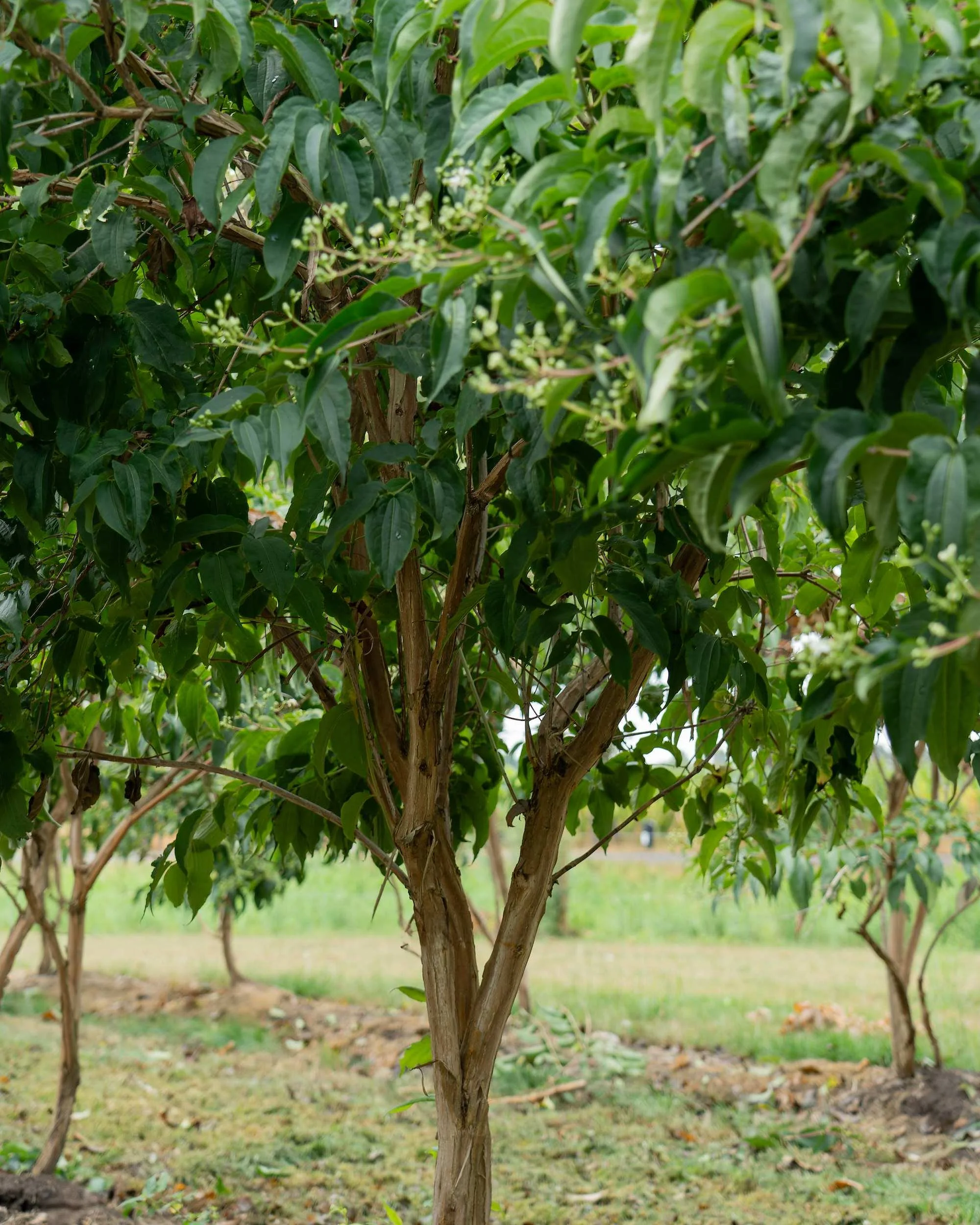
A multi-stem tree with two seasons of flower and bark that peels in soft, papery strips. Heptacodium miconioides brings scent, pollinators and structure to the garden just as most plants are winding down.
Fragrant white flowers from late summer into autumn
Showy rose-red calyces follow the flowers, extending the display
Pale, peeling bark that looks wonderful in winter
A magnet for bees and butterflies late in the season
Please check before you visit. Our nursery is very well stocked, but what we hold changes with the seasons, so this plant may not always be in stock. Enquire before you head over and we will check availability and the sizes we have for you.
At a glance
Type
Multi-stem tree
Foliage
Deciduous
Seasons of interest
Late summer and autumn flowers, winter bark
Eventual size
Typically 4 to 8 m tall
Position
Full sun or partial shade
Soil
Moist but well-drained, most soil types
Hardiness
Fully hardy in the UK
Available
A range of sizes and forms. Ask our team for current specimens and pricing.
Why we love it
Heptacodium miconioides saves its best for the end of the season, just when many gardens are winding down. From late summer into autumn it is smothered in clusters of small, creamy white, jasmine-scented flowers that pull in bees, hoverflies and butterflies in their hundreds. As the petals drop, the calyces left behind swell and turn rosy pink to red, so the tree has a second flush of colour well into October.
Then, once the leaves fall, the bark takes over. It peels in long, papery strips of pale tan and cream, which looks especially striking on a multi-stem where several trunks catch the low winter light. The long, glossy leaves are attractive all summer and the habit is open and slightly informal. It is rare in the wild in China, and still relatively unusual in gardens, which makes it a lovely choice for anyone who wants something a little different.
Choosing a size
Multi-stem trees are sold by height and spread, and Heptacodium grows quite quickly, so even a modest tree soon fills out. A smaller specimen suits a border or courtyard and will flower within a season or two, while a taller tree gives you peeling bark and a full canopy from the start. Every tree has its own arrangement of stems, so we always suggest choosing yours by eye.
How to use it
Use it as a feature tree in a mixed or prairie-style border, where its late flowers sit beautifully with ornamental grasses, asters, Persicaria and late salvias. It is ideal for extending interest beyond high summer and works well near a terrace or seating area where you can enjoy the evening scent and the buzz of pollinators. In winter, uplighting the peeling stems creates a lovely effect.
Planting
Plant root-balled trees between November and March, or pot-grown trees at any time of year if watered through dry weather. Dig a hole two to three times the width of the root ball but no deeper, set the tree at the same level it was growing, stake it securely and backfill with the original soil. Water thoroughly and finish with a mulch of peat-free compost.
Looking after it
Water deeply once a week in dry spells during the first two summers. Heptacodium flowers on the current year's growth, so any shaping is best done in late winter or early spring: remove crossing or congested stems and lift the lower branches to show off the bark. It is adaptable and grows well in most moist but well-drained soils, including clay and chalk.
Why is it called the seven son flower?
The name comes from the way the flowers are arranged: they are borne in small clusters often described as having seven parts, six flowers grouped around a seventh. The botanical name says the same thing, as Heptacodium comes from the Greek for seven and head. It is native to China, where it has become rare in the wild.
See it in person
Every plant at Form is hand-selected, none contains new peat, and nothing beats choosing yours by eye. Visit our Row Town showroom in Surrey, just 30 minutes from London, where our team will show you the best of what is on the nursery right now. We deliver across London, Surrey and the Home Counties, and nationwide.
Walk in any time during opening hours and you will be looked after. If you would like dedicated time with a specialist, book a Genus Bar appointment.

Frequently asked questions
-
It typically grows to 4 to 8m tall with a spread of around 3 to 5m, forming an open, vase-shaped multi-stem tree.
-
It flowers from late summer into early autumn, usually August to September. The pinkish red calyces that follow keep the colour going into October.
-
Yes, it is one of the best late-season plants for pollinators. The scented flowers attract bees, butterflies and hoverflies at a time when nectar is getting scarce.
-
It is relatively quick, often adding 30 to 60cm a year once established, and flowers from a young age.
-
Yes, the flowers have a sweet, jasmine-like scent that is noticeable on warm late summer days and into the evening.
-
Yes, the pale tan bark peels away in long, papery strips, giving it real winter interest once the leaves have fallen. The effect becomes more pronounced as the stems mature.
-
It grows in full sun or partial shade, though flowering is most generous in a sunny spot.
-
Yes, it is fully hardy throughout most of the UK and copes well with cold winters once established.
-
We keep a very well-stocked nursery, but our stock changes with the seasons, so availability varies. Please email us before you visit and we will check what we have and the sizes available.
-
Yes, and we would love you to. Every multi-stem tree is individual, with its own branch structure and character, so we always encourage customers to choose by eye. Our largest specimens are held at our Row Town showroom in Surrey. Walk in any time during opening hours, or book a Genus Bar appointment with one of our specialists. If you can’t visit, we are happy to send photographs of individual trees.
-
Yes, we deliver nationwide. Deliveries are arranged by our dedicated in-house operations team, and larger specimens can be offloaded by HI-AB or Moffett where needed. We will always agree the most suitable option with you before delivery.
All our multi-stem trees
Explore every tree in our multi-stem trees collection, or view them all with photographs →
Heptacodium miconioides
Can’t see what you’re looking for?
Get in touch and we’ll help you find it. Our nursery is very well stocked and we can source almost any plant through our network of trusted growers. Email info@formplants.com, or send us your whole plant list through our bespoke sourcing service.