
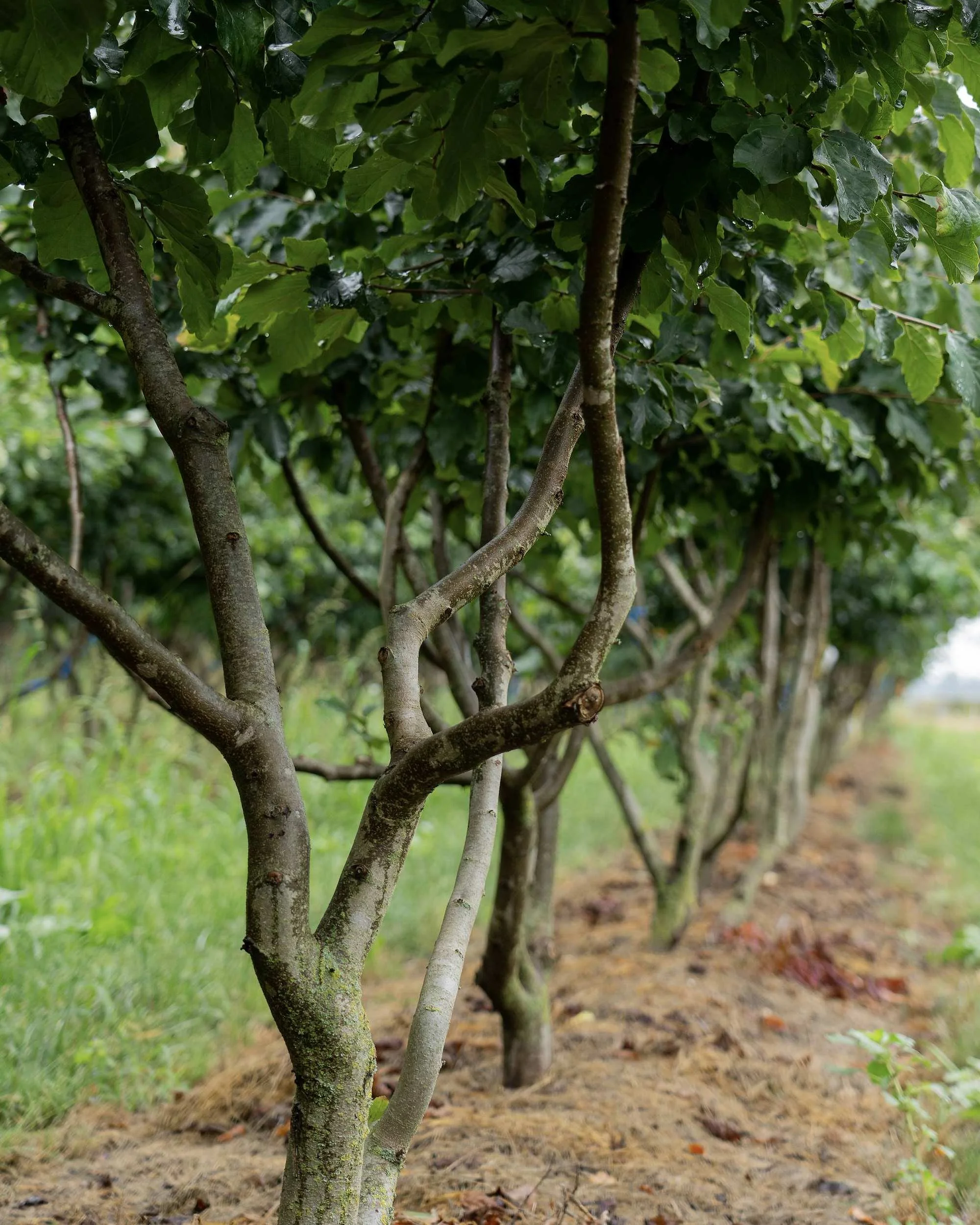
Multi-stem Trees
Parrotia persica
Persian ironwood
One of the finest trees for autumn colour, Parrotia persica turns fiery shades of red, orange and gold. As a multi-stem, its graceful spreading habit and flaking bark make it a true year-round specimen.
Spectacular autumn colour in red, orange and gold
Patchwork bark that flakes with age
Tiny crimson flowers on bare stems in late winter
A broad, elegant multi-stem silhouette
Please check before you visit. Our nursery is very well stocked, but what we hold changes with the seasons, so this plant may not always be in stock. Enquire before you head over and we will check availability and the sizes we have for you.
At a glance
Type
Multi-stem tree
Foliage
Deciduous
Seasons of interest
Autumn colour, winter flowers and bark
Eventual size
Typically 8 to 12 m tall, with a wide spread
Position
Full sun or partial shade
Soil
Moist but well-drained; best colour on neutral to acid soil
Hardiness
Fully hardy in the UK
Available
A range of sizes and forms. Ask our team for current specimens and pricing.
Why we love it
Parrotia persica is one of the finest trees for autumn colour. Its broad, glossy leaves turn every shade of fire in October, from gold and orange through to crimson and deep purple, often all at once. Then, in late winter, tiny flowers with clusters of red stamens appear on the bare branches, a subtle but lovely sight up close. As the tree matures, the bark flakes away in patches of grey, fawn and cream, like a plane tree.
As a multi-stem it develops a wide, spreading, layered crown, with the branches often reaching out almost horizontally, giving a beautiful architectural shape. It is a member of the witch hazel family, native to northern Iran and the Caucasus, and it is tough, adaptable and long-lived. Designers prize it as a spreading specimen for larger gardens, where it offers interest in every season.
Choosing a size
Multi-stem Parrotia are chosen by height and spread, and because the tree eventually grows much wider than many people expect, it is worth considering the space you have. A younger tree gives you time to plan around it, while a mature specimen offers a full, layered crown and developed bark from the start. Shapes vary, so choosing by eye is well worthwhile.
How to use it
Plant it as a specimen in a lawn or larger garden, where its spreading shape and autumn colour can be seen from a distance. It looks magnificent with low autumn sun behind it, and pairs well with ornamental grasses, Cornus and autumn-flowering bulbs. It is also excellent in woodland edges and parkland-style planting. Give it plenty of room to spread, as the layered branches are a large part of its beauty, and avoid planting too close to buildings or boundaries.
Planting
Plant root-balled trees between November and March, and pot-grown trees year-round if you can keep them watered. Dig a hole two to three times as wide as the root ball but no deeper, keep the root ball level with the soil, stake to hold the roots steady, then backfill and water thoroughly. Mulch with peat-free compost to retain moisture.
Looking after it
Water deeply during dry spells for the first two summers. Pruning is rarely needed; in late winter, remove any dead or crossing branches and, if you like, lift the lower branches to reveal the stems. It grows in moist but well-drained soil and tolerates chalk, but autumn colour is at its richest on neutral to acid ground.
Why is Parrotia called Persian ironwood?
It gets its common name from its native home in northern Iran, historically Persia, and from its timber, which is exceptionally hard and dense. The botanical name honours Friedrich Parrot, a German naturalist and explorer who travelled in the region in the early nineteenth century.
See it in person
Every plant at Form is hand-selected, none contains new peat, and nothing beats choosing yours by eye. Visit our Row Town showroom in Surrey, just 30 minutes from London, where our team will show you the best of what is on the nursery right now. We deliver across London, Surrey and the Home Counties, and nationwide.
Walk in any time during opening hours and you will be looked after. If you would like dedicated time with a specialist, book a Genus Bar appointment.

Frequently asked questions
-
It typically reaches 8 to 12m tall with a wide spread, often as broad as it is tall, though it grows steadily and takes many years to reach full size.
-
Autumn colour usually begins in late September and peaks in October, with shades of gold, orange, crimson and purple.
-
Yes, it produces small flowers with clusters of red stamens on bare branches in late winter, usually January to March.
-
It grows at a moderate rate, usually around 30cm a year once established.
-
Yes, it tolerates chalky soils, though the autumn colour tends to be richest on neutral to acid soil.
-
It grows in full sun or partial shade, but colours best in a sunny position.
-
Yes, it belongs to the witch hazel family, Hamamelidaceae, which explains its late winter flowers and fiery autumn colour.
-
The species forms a wide, spreading tree, while 'Vanessa' is more upright and narrower, making it better suited to smaller gardens.
-
We keep a very well-stocked nursery, but our stock changes with the seasons, so availability varies. Please email us before you visit and we will check what we have and the sizes available.
-
Yes, and we would love you to. Every multi-stem tree is individual, with its own branch structure and character, so we always encourage customers to choose by eye. Our largest specimens are held at our Row Town showroom in Surrey. Walk in any time during opening hours, or book a Genus Bar appointment with one of our specialists. If you can’t visit, we are happy to send photographs of individual trees.
-
Yes, we deliver nationwide. Deliveries are arranged by our dedicated in-house operations team, and larger specimens can be offloaded by HI-AB or Moffett where needed. We will always agree the most suitable option with you before delivery.
All our multi-stem trees
Explore every tree in our multi-stem trees collection, or view them all with photographs →
Parrotia persica
Can’t see what you’re looking for?
Get in touch and we’ll help you find it. Our nursery is very well stocked and we can source almost any plant through our network of trusted growers. Email info@formplants.com, or send us your whole plant list through our bespoke sourcing service.