
Multi-stem Trees
Punica granatum
Pomegranate
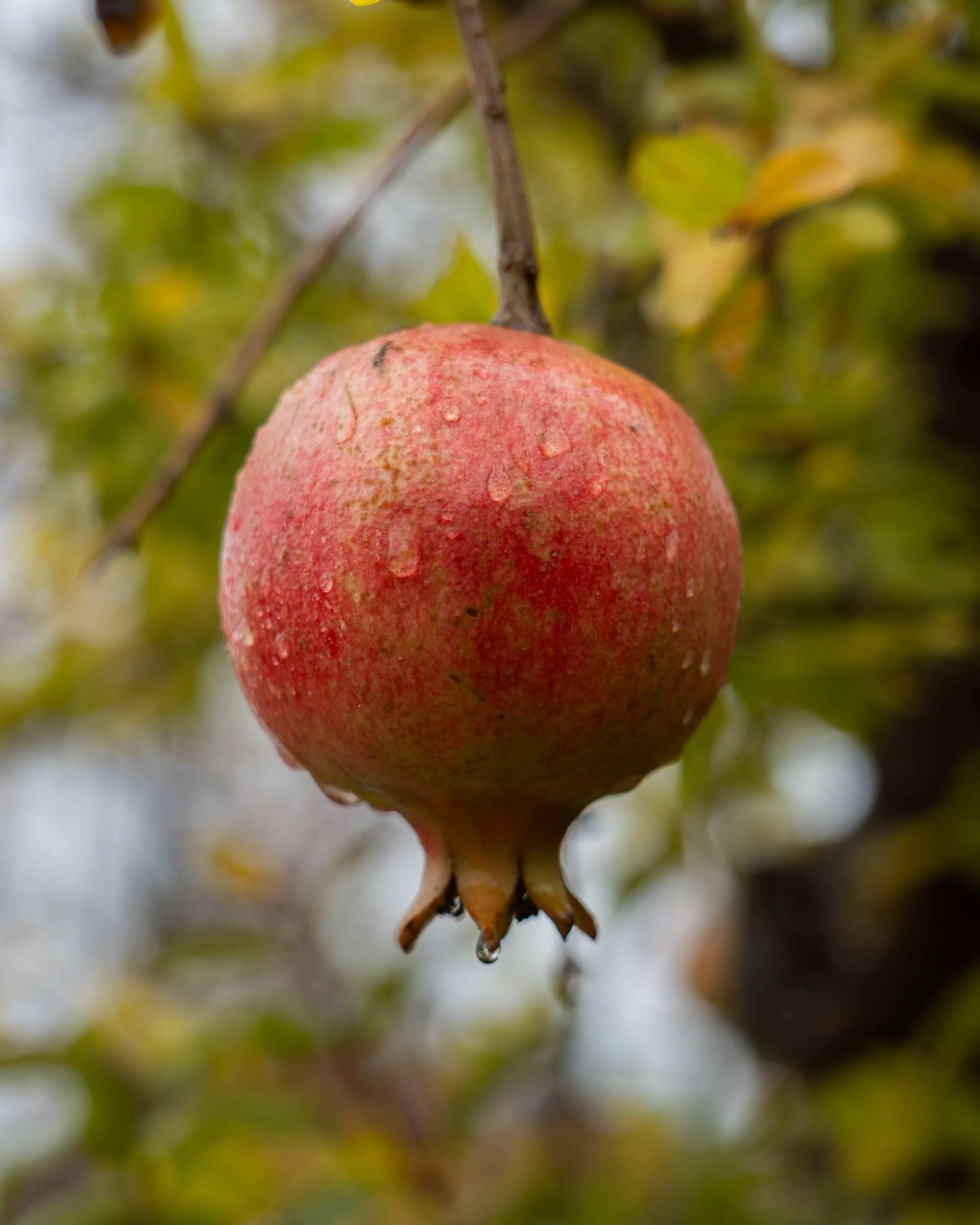
Glossy leaves, vivid scarlet summer flowers and, after a hot summer, ornamental fruit. A multi-stem Punica granatum brings a Mediterranean feel to a warm, sheltered garden.
Vivid scarlet-orange flowers in summer
Glossy green leaves, turning yellow in autumn
Ornamental fruits after hot summers
A characterful Mediterranean multi-stem
Please check before you visit. Our nursery is very well stocked, but what we hold changes with the seasons, so this plant may not always be in stock. Enquire before you head over and we will check availability and the sizes we have for you.
At a glance
Type
Multi-stem tree
Foliage
Deciduous
Seasons of interest
Summer flowers, autumn colour and fruit
Eventual size
Typically 2 to 4 m tall in the UK
Position
Full sun, warm and sheltered
Soil
Free-draining
Hardiness
Hardy in sheltered, sunny spots in much of the UK; protect young plants in very cold winters
Available
A range of sizes and forms. Ask our team for current specimens and pricing.
Why we love it
Punica granatum, the pomegranate, brings a touch of the Mediterranean to a sunny British garden. Through summer it produces striking, funnel-shaped flowers of vivid scarlet orange, with crinkled, silky petals set in a fleshy, waxy calyx. The small, glossy leaves emerge bronze in spring, turn fresh green, then become clear butter yellow in autumn. After a long hot summer you may also be rewarded with fruit.
Grown as a multi-stem it forms a characterful small tree with several twisting stems and a dense, twiggy crown. It has been cultivated for thousands of years and carries a sense of history and story. Designers use it to bring warmth and an exotic note to courtyards, terraces and gravel gardens, where it thrives on reflected heat.
Choosing a size
Multi-stem trees are sold by height and spread, and in the UK the pomegranate stays fairly compact, so even a mature specimen suits a courtyard or a large pot. A smaller plant is ideal for a container you can move under cover in winter, while a more established tree has thicker stems, a fuller crown and more flowering wood. Every plant has its own shape, so choosing by eye at the nursery is always worthwhile.
How to use it
Plant it in the warmest, sunniest spot you have, ideally against a south-facing wall, in a sheltered courtyard or in a gravel garden. It pairs well with other sun lovers such as olives, figs, lavender, rosemary, Cistus and Euphorbia, and looks superb in a large terracotta pot on a terrace.
Planting
Pomegranates are best planted in spring, once the worst frosts have passed, so they have a full season to settle. Choose free-draining soil, improving heavy ground with grit, and dig a hole wider than the root ball but no deeper. Stake larger plants, water in thoroughly, and mulch with gravel or peat-free compost kept clear of the stems. In pots, use a peat-free, loam-based compost with added grit.
Looking after it
Water regularly through the first two summers, and pot-grown plants throughout the growing season, but never let the roots sit wet. Prune lightly in late winter or early spring, thinning crowded shoots and removing suckers from the base. Young plants benefit from fleece in very cold spells, and pots can be moved into a cold greenhouse or porch for winter.
Will a pomegranate fruit in the UK?
It can, but fruit is a bonus rather than a certainty. Pomegranates need a long, hot summer to ripen, so outdoors in the UK they fruit best after warm years and in the sunniest, most sheltered sites, often against a south-facing wall. Fruit is more reliable under glass. Grown outside, the brilliant flowers and autumn colour make it well worth planting for ornament alone.
See it in person
Every plant at Form is hand-selected, none contains new peat, and nothing beats choosing yours by eye. Visit our Row Town showroom in Surrey, just 30 minutes from London, where our team will show you the best of what is on the nursery right now. We deliver across London, Surrey and the Home Counties, and nationwide.
Walk in any time during opening hours and you will be looked after. If you would like dedicated time with a specialist, book a Genus Bar appointment.

Frequently asked questions
-
Outdoors in the UK, Punica granatum typically grows 2 to 4m tall, and it can be kept smaller in a container.
-
Established plants tolerate a reasonable amount of frost in a sheltered, free-draining spot, particularly in the south. Young plants are more tender and benefit from protection in very cold winters.
-
It flowers through summer, usually from June into August or September, with the most flowers in warm, sunny weather.
-
Yes, it grows very well in a large pot of peat-free, loam-based compost with added grit. Containers can be moved under cover in the coldest weather.
-
No, it is deciduous in the UK. The leaves turn yellow in autumn before falling.
-
The flowers are usually a vivid scarlet to orange red, with crumpled petals and a thick, waxy calyx that becomes the crown of the fruit.
-
Too much shade, a cool site or heavy pruning are the usual reasons. Move it into the sunniest spot available, prune only lightly and avoid rich, high-nitrogen feeds.
-
It is slow to moderate in the UK, typically putting on 20 to 30cm a year in a warm position.
-
We keep a very well-stocked nursery, but our stock changes with the seasons, so availability varies. Please email us before you visit and we will check what we have and the sizes available.
-
Yes, and we would love you to. Every multi-stem tree is individual, with its own branch structure and character, so we always encourage customers to choose by eye. Our largest specimens are held at our Row Town showroom in Surrey. Walk in any time during opening hours, or book a Genus Bar appointment with one of our specialists. If you can’t visit, we are happy to send photographs of individual trees.
-
Yes, we deliver nationwide. Deliveries are arranged by our dedicated in-house operations team, and larger specimens can be offloaded by HI-AB or Moffett where needed. We will always agree the most suitable option with you before delivery.
All our multi-stem trees
Explore every tree in our multi-stem trees collection, or view them all with photographs →
Punica granatum
Can’t see what you’re looking for?
Get in touch and we’ll help you find it. Our nursery is very well stocked and we can source almost any plant through our network of trusted growers. Email info@formplants.com, or send us your whole plant list through our bespoke sourcing service.