
Hedging
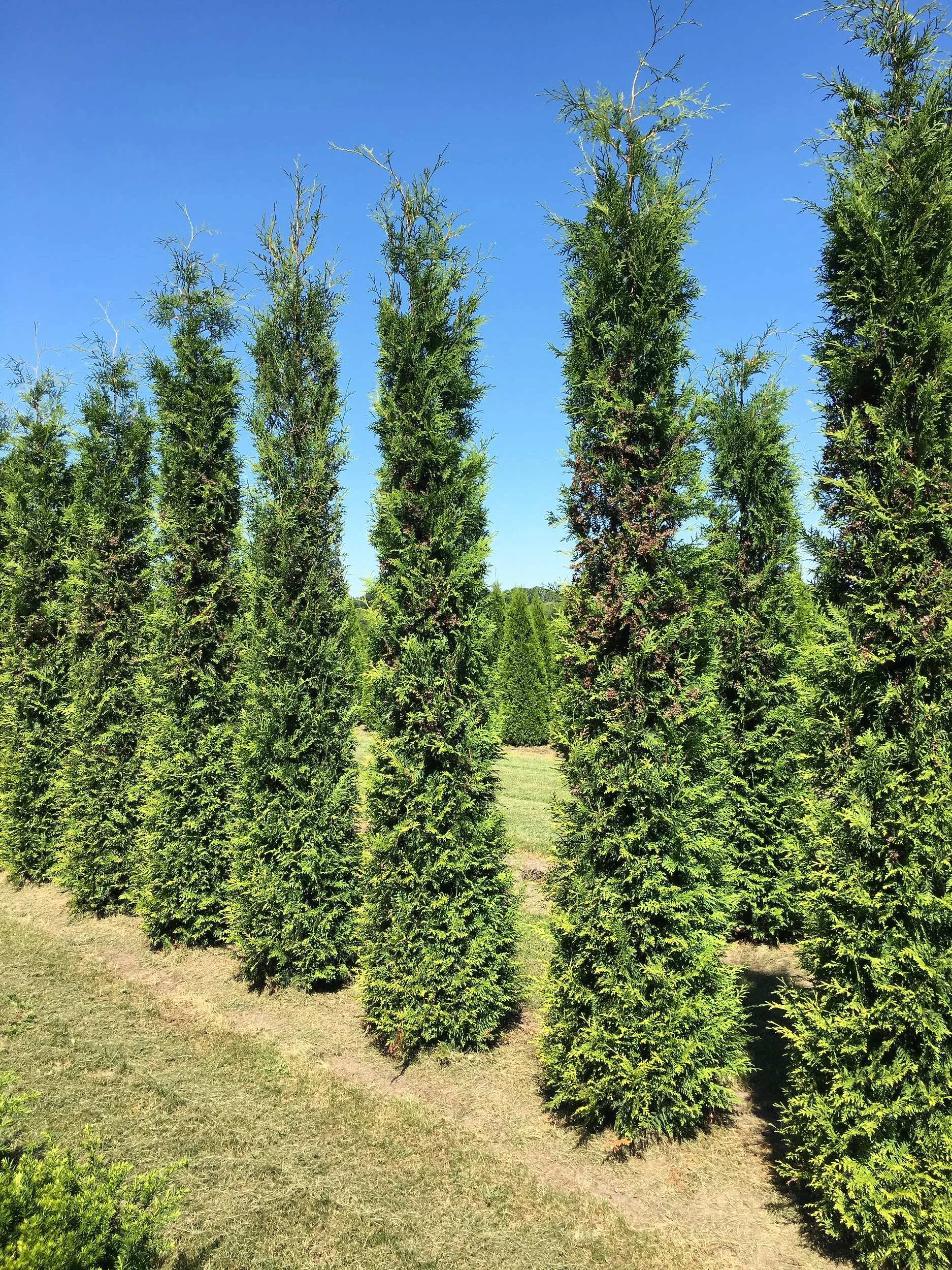
Thuja occidentalis 'Brabant'
White cedar
A fast-growing, dense conifer with soft green foliage, popular for quick, neat evergreen screening.
Fast-growing evergreen screen
Soft, bright green foliage
Dense and easy to clip
Good value for long runs
Please check before you visit. Our nursery is very well stocked, but what we hold changes with the seasons, so this plant may not always be in stock. Enquire before you head over and we will check availability and the sizes we have for you.
At a glance
Type
Hedging
Foliage
Evergreen
Seasons of interest
Year-round foliage
Growth rate
Fast
Hedge height
Suits hedges from about 1.5 m to 4 m
Position
Full sun or partial shade
Soil
Moist but well-drained
Hardiness
Fully hardy in the UK
Available
A range of sizes, from value hedging plants to large instant hedging for an immediate result. Ask our team for current availability and pricing.
Why we love Thuja 'Brabant'
If you want height and privacy soon, without the headache of leylandii, plant 'Brabant'. Thuja occidentalis 'Brabant' is a fresh green, very hardy conifer that knits together into a solid green wall, with soft, flat sprays of foliage that smell lovely when you brush past or clip them.
It grows quickly, around 30 to 40cm a year once established, but steadily rather than explosively, at roughly half the pace of leylandii. That makes it far easier to hold at the height you want, and it takes regular clipping well. It's a natural choice for screening a boundary or a neighbour's window.
Choosing a size
Think about how soon you need the screen. Plants of 80 to 125cm are ideal for growing on, and because 'Brabant' is quick, they close up into a dense hedge in a few seasons. At 150 to 180cm you have good privacy from the start. For a finished tall screen on planting day, larger root-balled plants come at 2.5 to 3m. As a hedge it's easy to keep at around 2 to 3m.
How many per metre depends on how wide the plants are when they arrive: divide 100 by the width in centimetres. A 50cm wide plant goes in at 2 per metre. The calculator above works it out for you, and the team will check the spacing on every order.
Planting
Plant in autumn while the soil is warm and moist, or in early spring. Root-balled plants are available from roughly October or November to March, and pot-grown plants can go in all year with regular watering. 'Brabant' is broad, so set the line at least 60 to 75cm from a fence or wall to leave room to clip the back. Dig a trench, keep the top of the root ball level with the soil, loosen the hessian at the top but leave the wire on, then water well and mulch with peat-free compost. It loves moisture and dislikes ground that stays waterlogged, so add plenty of organic matter on light, sandy soils.
Looking after it
Watering in the first two summers is the key to a thick, green hedge. Give a deep soak once or twice a week in dry spells. Clip two or three times a year, in May or June and again in August or early September, little and often, and always within the green growth, because thuja doesn't reliably regrow from bare brown wood. A light bronze tint in a cold winter is natural and greens up again in spring.
Is thuja poisonous?
Thuja is harmful if eaten and can upset dogs, cats and horses that chew it. The foliage can irritate sensitive skin, so wear gloves when clipping and clear up the clippings. Looking for something narrower and slower? Try Thuja 'Smaragd'.
See it in person
Every plant at Form is hand-selected, none contains new peat, and nothing beats choosing yours by eye. Visit our Row Town showroom in Surrey, just 30 minutes from London, where our team will show you the best of what is on the nursery right now. We deliver across London, Surrey and the Home Counties, and nationwide.
Walk in any time during opening hours and you will be looked after. If you would like dedicated time with a specialist, book a Genus Bar appointment.
Frequently asked questions
-
Thuja occidentalis 'Brabant' typically grows around 30 to 40cm a year once established, and sometimes more on moist, fertile soil. That makes it one of the quicker evergreen hedges, while still being much easier to control than leylandii, which can put on 60 to 90cm a year.
-
Spacing depends on how wide the plants are supplied: divide 100 by the width in centimetres, so a plant 50cm wide is planted at 2 per metre. Younger, slimmer plants of 80 to 125cm usually go in at around 2 to 3 per metre. The Form Plants team confirms spacing for each order.
-
Thuja 'Brabant' is broader and faster growing, at around 30 to 40cm a year, so it suits tall screens and quick privacy. Thuja 'Smaragd' is narrow and columnar, grows more slowly at around 15 to 30cm a year, needs less clipping and keeps a brighter emerald green in winter. Both are forms of Thuja occidentalis.
-
Yes. Thuja 'Brabant' gives a dense, tall evergreen screen but grows at roughly half the rate of leylandii, so it is far easier to keep at a set height. It also has softer, aromatic foliage and needs fewer heavy cuts to stay in shape.
-
Thuja does not reliably regrow from bare brown wood, so it is best not to cut back into old growth. Trim little and often within the green foliage two or three times a year, and keep the hedge slightly narrower at the top so the base stays well clothed.
-
The most common causes of browning in a young thuja hedge are dry roots in the first summers, drying winds, cutting into old wood or waterlogged soil. Regular deep watering, a good mulch and clipping only into green growth keep the hedge healthy. Some bronzing of the foliage in a cold winter is natural and greens up again in spring.
-
Thuja is harmful if eaten, as its foliage contains thujone, and it can upset dogs, cats and horses that chew it. The foliage can also irritate sensitive skin, so wear gloves when clipping and clear up the clippings.
-
A Thuja 'Brabant' hedge can be kept anywhere from about 1.5m to 4m or more, and it is easy to hold at around 2m to 3m with regular clipping. Left unclipped, it would grow into a large conical tree.
-
Trim Thuja 'Brabant' two or three times a year between late spring and late summer, usually in May or June and again in August or early September. Avoid clipping in very hot, dry weather, and always check for nesting birds first.
-
The cost depends on the height and tier you choose. Value plants are younger plants for longer runs on a budget that knit together over a few seasons, while Premium plants are fuller, taller root-balled plants for an instant screen. Live prices and sizes are shown on this page, and the team confirms quantities and pricing for each order.
-
Yes. You are welcome to visit the Form Plants showroom at Row Town in Surrey, open Monday to Saturday and on bank holidays, to see the hedging and choose your plants. You can simply pop in during opening hours, or book a Genus Bar appointment for unhurried time with the team and help with quantities.
-
Yes, Form Plants delivers nationwide. Our in-house team arranges every delivery and can offload larger root-balled plants and instant hedge elements by HIAB or Moffett crane where access allows. Delivery is quoted for each order depending on size, quantity and location.
All our hedging
Explore every option in our hedging collection, or view them all with photographs →
Thuja occidentalis 'Brabant'
Can’t see what you’re looking for?
Get in touch and we’ll help you find it. Our nursery is very well stocked and we can source almost any plant through our network of trusted growers. Email info@formplants.com, or send us your whole plant list through our bespoke sourcing service.