
Hedging
Ilex crenata
Japanese holly
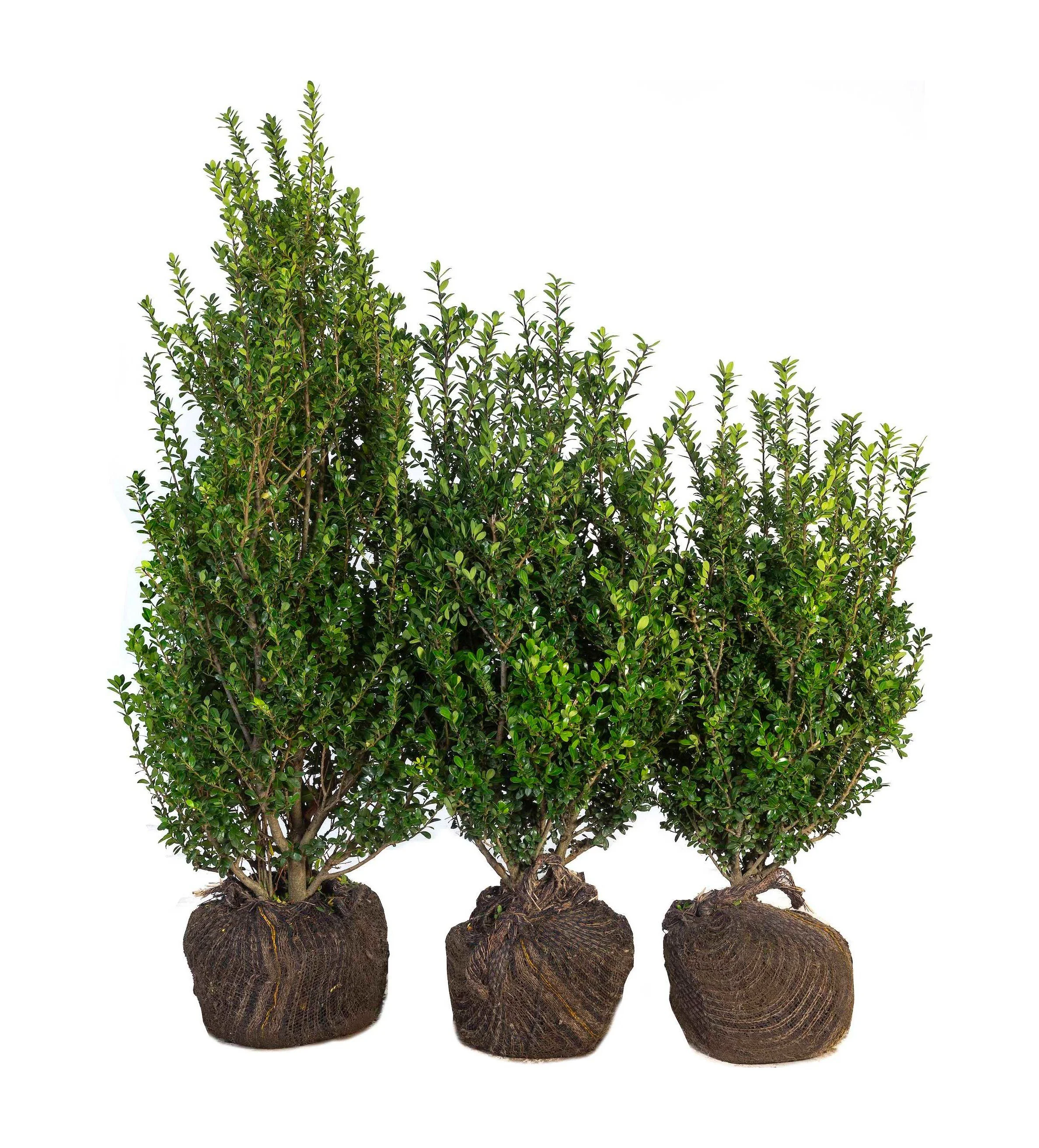
Small glossy leaves, a dense habit and a crisp finish. Ilex crenata is the go-to evergreen for low hedges, parterres and knot gardens, and a stylish alternative to box.
Small, glossy evergreen leaves
Ideal for low hedges, edging and parterres
A popular alternative to box (Buxus)
Clips to a neat, formal finish
Please check before you visit. Our nursery is very well stocked, but what we hold changes with the seasons, so this plant may not always be in stock. Enquire before you head over and we will check availability and the sizes we have for you.
At a glance
Type
Hedging
Foliage
Evergreen
Seasons of interest
Year-round structure
Growth rate
Slow
Hedge height
Suits low hedges from about 0.3 m to 1.2 m
Position
Full sun or partial shade
Soil
Moist but well-drained, neutral to acid; dislikes dry chalk
Hardiness
Fully hardy in the UK
Available
A range of sizes, from smaller plants to mature specimens for an instant result. Ask our team for current availability and pricing.
Why we love Japanese holly
If you've lost your box, or don't want to risk it, plant Japanese holly. Ilex crenata is the box alternative we recommend most: small, glossy, evergreen leaves with the same fine texture, the same neat clip into low hedges, balls and parterres, and no trouble from box blight or box tree caterpillar.
Don't let the name put you off. The leaves are small, oval and softly toothed rather than spiny, so it's pleasant to handle and brush past. It's dense and slow growing, around 10 to 20cm a year, which means it holds a crisp line between clips.
Choosing a size
Japanese holly is at its best as a low to medium hedge. At 20 to 30cm it edges paths and fills parterres and knot gardens. At 30 to 50cm it's the classic low border edge, just where box used to be. Around 50 to 80cm makes a low boundary or a division within a garden, and up to about 1.2m gives taller formal structure around a terrace. For anything above head height, yew is the natural choice.
How many per metre depends on how wide the plants are when they arrive: divide 100 by the width in centimetres. A 25cm wide plant goes in at 4 per metre. The calculator above works it out for you, and the team will check the spacing on every order.
Planting
Plant in autumn or spring, when the soil is moist and the weather mild, though pot-grown plants can go in all year with watering. Mark the line with string, or pegs for curves and patterns, and dig a trench 30 to 40cm wide. Tease out any circling roots, plant at the same depth as in the pot, water well and mulch with peat-free compost to keep its shallow roots moist. It loves neutral to acid soil: on dry, chalky ground the leaves can yellow, so enrich the soil generously, or grow it in pots of peat-free ericaceous compost instead.
Looking after it
Japanese holly likes steady moisture, so water deeply in dry spells for at least the first two summers. Clip once or twice a year in summer: for a crisp, formal finish, trim in early summer once the new growth has firmed and again lightly in late summer, or give it one trim in late summer for a softer look. Shears give the most precise finish on low hedges and balls.
Growing it in pots
Clipped balls and cubes of Japanese holly look lovely in containers on terraces, steps and roof gardens. Use peat-free ericaceous compost, water regularly so it never dries out, and feed in spring to keep the leaves dark and glossy.
See it in person
Every plant at Form is hand-selected, none contains new peat, and nothing beats choosing yours by eye. Visit our Row Town showroom in Surrey, just 30 minutes from London, where our team will show you the best of what is on the nursery right now. We deliver across London, Surrey and the Home Counties, and nationwide.
Walk in any time during opening hours and you will be looked after. If you would like dedicated time with a specialist, book a Genus Bar appointment.
Frequently asked questions
-
Yes. Ilex crenata, or Japanese holly, has small, glossy evergreen leaves with a similar fine texture to box, clips neatly into low hedges and shapes, and is not affected by box blight or box tree caterpillar. It prefers neutral to acid soil that stays moist, so on chalky ground improve the soil with organic matter.
-
Ilex crenata is slow growing, typically around 10 to 20cm a year once established. This slow growth means it holds its shape well between clips and needs only one or two light trims a year.
-
Spacing depends on how wide the plants are when supplied: divide 100 by the width in centimetres. Most low hedges use 3 to 4 plants per metre, while parterres and fine edging use smaller plants planted closer. Our team confirms the spacing for each order.
-
Clip Ilex crenata once or twice a year in summer. For a crisp formal finish, trim in early summer once new growth has firmed and lightly again in late summer; for a softer look, one trim in late summer is enough. Check for nesting birds before cutting.
-
Yellowing leaves on Ilex crenata are most often a sign of alkaline or chalky soil, or of the roots drying out. Water regularly in dry weather, mulch, and feed with a fertiliser for acid-loving plants. In containers, use peat-free ericaceous compost.
-
Yes, Ilex crenata grows well in full sun or partial shade. It is happiest where the soil stays moist, so in sunny, dry spots keep it well watered and mulched.
-
Ilex crenata is best as a low to medium hedge, usually kept between 30cm and 1.2 m (1 to 4 ft). It can grow taller over many years, but for hedges above head height yew or holly are better choices.
-
No. Despite being a holly, Ilex crenata has small, oval leaves with softly toothed edges and no sharp spines, so it is pleasant to handle, clip and brush past.
-
Like other hollies, Ilex crenata is best treated as mildly toxic. Eating the berries or leaves can cause stomach upset in dogs, cats and people. Clipped hedges carry few berries, but contact your vet if a pet eats any part of the plant.
-
The cost depends on the size of plant, the format and the tier you choose. Value hedging uses healthy younger Ilex crenata plants that knit together over time and suit longer runs on a budget, while Premium uses fuller, more mature plants and ready-made hedge elements for an instant result. Live prices and sizes are shown on this page, and the team confirms plant numbers and the total for each order.
-
Yes. You are welcome to visit our Row Town showroom in Surrey, open Monday to Saturday and on bank holidays (closed Sundays), to choose your plants in person. You can also book a Genus Bar appointment for help with sizes, spacing and quantities.
-
Yes, we deliver nationwide across the UK. Our in-house team arranges every delivery, with HIAB or Moffett offloading for larger root-balled plants and instant hedge elements, and will confirm timings and access with you before the day.
All our hedging
Explore every option in our hedging collection, or view them all with photographs →
Can’t see what you’re looking for?
Get in touch and we’ll help you find it. Our nursery is very well stocked and we can source almost any plant through our network of trusted growers. Email info@formplants.com, or send us your whole plant list through our bespoke sourcing service.