
Hedging
Ilex aquifolium
Common holly
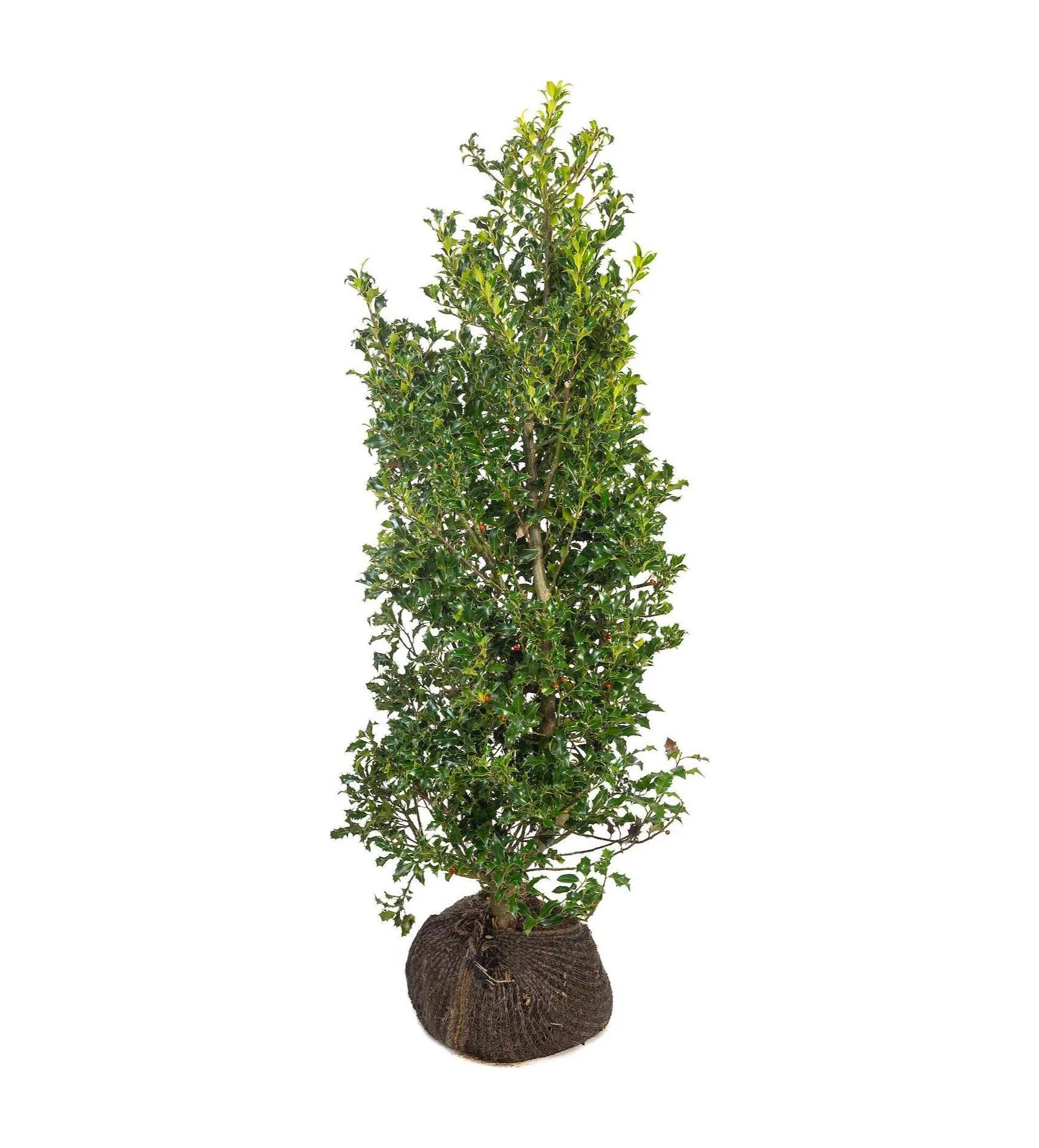
Our native holly makes a dense, glossy, evergreen hedge that is excellent for security, shelter and wildlife.
Glossy, spiny evergreen leaves
Native and excellent for wildlife
Dense and good for security
Tolerates shade
Please check before you visit. Our nursery is very well stocked, but what we hold changes with the seasons, so this plant may not always be in stock. Enquire before you head over and we will check availability and the sizes we have for you.
At a glance
Type
Hedging
Foliage
Evergreen
Seasons of interest
Year-round foliage, winter berries on female plants
Growth rate
Slow to moderate
Hedge height
Suits hedges from about 1 m to 3 m
Position
Full sun or shade
Soil
Most soils
Hardiness
Fully hardy in the UK
Available
A range of sizes, from value hedging plants to large instant hedging for an immediate result. Ask our team for current availability and pricing.
Why we love holly
For a boundary that looks smart, stays green and keeps people out, holly is hard to beat. Ilex aquifolium is a native evergreen with glossy, spined leaves that stay deep green all year, and a well-clipped holly hedge becomes dense enough to stop people, pets and wind.
It's also one of the few hedges that is genuinely happy in deep shade. Under trees or along a north-facing wall, where so much else struggles, plain green holly thrives. It shrugs off wind, coastal exposure and town pollution too.
Choosing a size
Holly grows slowly, around 15 to 30cm a year, so the height you plant is close to the height you'll enjoy for the first few years. If privacy matters soon, start tall. A 60 to 80cm hedge makes a low front boundary or edging. Around 100 to 125cm gives a solid boundary that rises to head height over several years. For privacy at around six feet, start at 150 to 200cm.
How many per metre depends on how wide the plants are when they arrive: divide 100 by the width in centimetres. A 50cm wide plant goes in at 2 per metre. The calculator above works it out for you, and the team will check the spacing on every order.
Planting
Autumn is the best time, ideally October and November while the soil is still warm, and root-balled holly can go in through to March. Dig a trench rather than separate holes, keep the top of the root ball level with the soil, as holly doesn't like being planted too deep, and fold back the hessian at the neck. Water well, even in winter, and mulch with peat-free compost. Holly grows in almost any soil, but it doesn't like ground that sits wet for long, so improve heavy soil with organic matter first.
Looking after it
Water deeply once a week in dry spells for the first two summers. After that, clip once a year in late summer, August or September, keeping the top a little narrower than the base so it stays leafy to the ground. Wear thick gloves and gather up the prickly clippings. If you'd like a holly that reaches screening height a little sooner, try Ilex 'Nellie R. Stevens'.
Good for wildlife
Holly gives something in every season. Scented white flowers open in May, and female plants follow with red berries that thrushes, blackbirds, redwings and fieldfares feed on through winter. Only female plants berry, but seed-raised hedging is a natural mix of male and female, so most holly hedges carry some fruit. The prickly growth is safe nesting cover, and holly feeds the caterpillars of the holly blue butterfly.
See it in person
Every plant at Form is hand-selected, none contains new peat, and nothing beats choosing yours by eye. Visit our Row Town showroom in Surrey, just 30 minutes from London, where our team will show you the best of what is on the nursery right now. We deliver across London, Surrey and the Home Counties, and nationwide.
Walk in any time during opening hours and you will be looked after. If you would like dedicated time with a specialist, book a Genus Bar appointment.
Frequently asked questions
-
Common holly (Ilex aquifolium) is slow growing, typically adding around 15 to 30cm a year once established. Growth is a little slower in the first year after planting while the roots settle. Because it grows slowly, starting with a taller plant is the quickest way to privacy.
-
Yes, holly is mildly toxic to dogs, cats and people. The berries and leaves contain saponins that can cause vomiting, diarrhoea and drooling if eaten, and the spines can irritate the mouth. Serious poisoning is uncommon, but if a pet eats holly, contact your vet for advice.
-
Spacing depends on how wide the plants are when supplied: divide 100 by the plant's width in centimetres. A holly 50cm wide is planted at 2 per metre, while narrower young plants often go in at 3 per metre. Our team confirms the spacing for each order.
-
Autumn is ideal, from October to November, while the soil is still warm, and root-balled holly can be planted through to March. Pot-grown holly and instant hedge elements can be planted most of the year if you water them well through dry spells.
-
Clip a holly hedge once a year in late summer, usually August or September. This keeps it dense, allows berries to develop and avoids the main bird nesting season. Always check for active nests before cutting.
-
Only female holly plants carry berries, and they need a male holly nearby for pollination. Seed-raised holly hedging is a natural mix of male and female plants, so most common holly hedges include some berrying plants. Clipping once a year in late summer helps keep a good crop.
-
Yes, holly is one of the best evergreen hedges for shade. It grows well in full sun, partial shade and the dry shade beneath trees. Plain green holly is the most shade tolerant, while variegated forms colour best in sun.
-
Holly hedges are usually kept between 1 m and 4 m (3 to 13 ft) tall, and can be held at any height in that range with an annual clip. Left unclipped, Ilex aquifolium will eventually grow into a tree.
-
Yes, holly responds well to hard pruning and regrows from older wood. Cut back in late winter or early spring, ideally one side and the top in the first year and the other side the following year. Feed, water and mulch afterwards to support the new growth.
-
The cost depends on the size of plant, the format and the tier you choose. Value hedging uses healthy younger holly plants that knit together over time and suit longer runs on a budget, while Premium uses fuller, more mature plants and ready-made hedge elements for an instant result. Live prices and sizes are shown on this page, and the team confirms plant numbers and the total for each order.
-
Yes. You are welcome to visit our Row Town showroom in Surrey, open Monday to Saturday and on bank holidays (closed Sundays), to choose your plants in person. You can also book a Genus Bar appointment for help with sizes, spacing and quantities.
-
Yes, we deliver nationwide across the UK. Our in-house team arranges every delivery, with HIAB or Moffett offloading for larger root-balled plants and instant hedge elements, and will confirm timings and access with you before the day.
All our hedging
Explore every option in our hedging collection, or view them all with photographs →
Can’t see what you’re looking for?
Get in touch and we’ll help you find it. Our nursery is very well stocked and we can source almost any plant through our network of trusted growers. Email info@formplants.com, or send us your whole plant list through our bespoke sourcing service.