
Hedging
Prunus laurocerasus 'Rotundifolia'
Cherry laurel
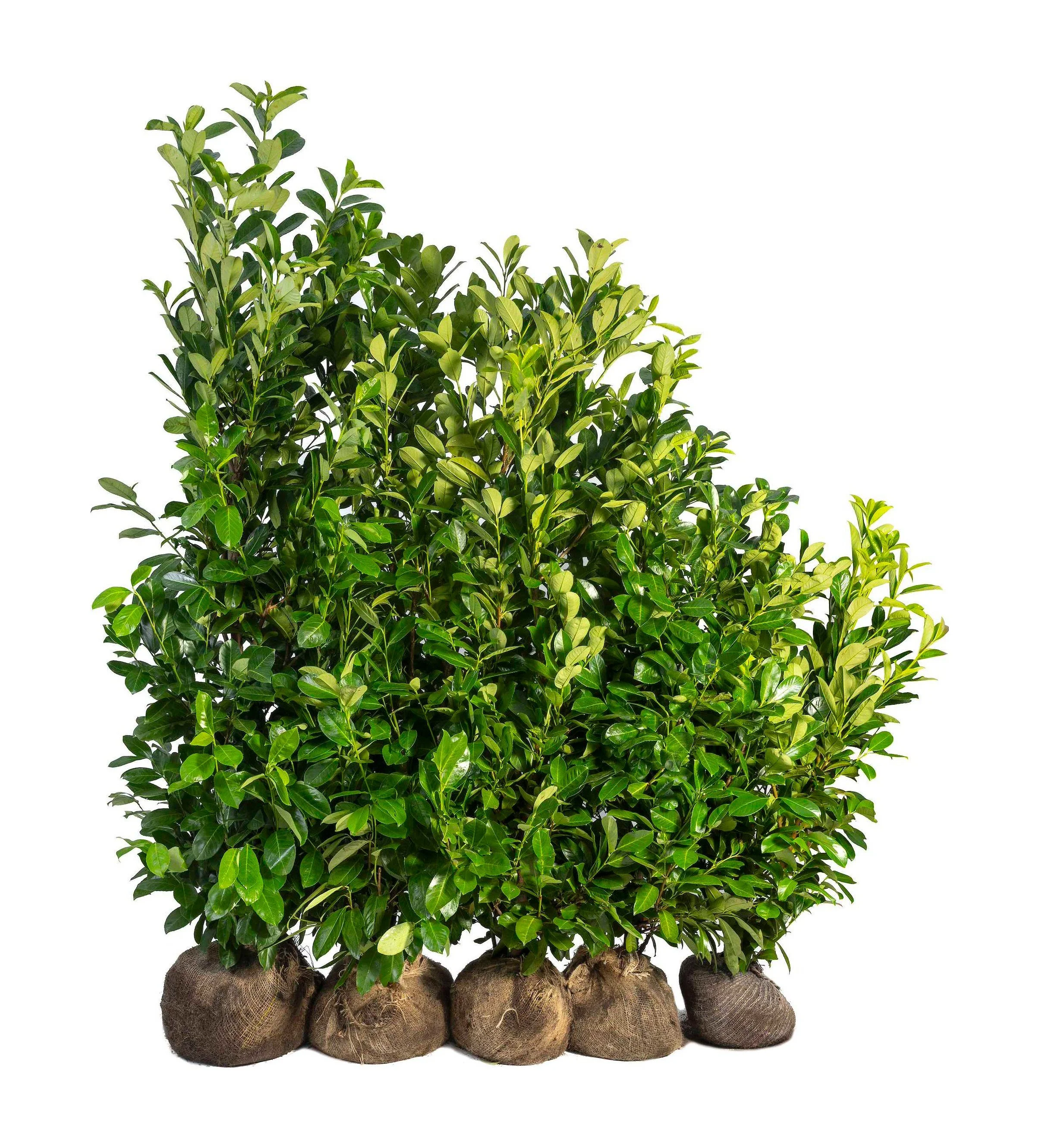
Large, glossy, bright green leaves and fast growth make cherry laurel one of the quickest ways to a dense evergreen screen.
Fast-growing evergreen screen
Large, glossy leaves
Dense and tolerant of shade
Good value for long runs
Please check before you visit. Our nursery is very well stocked, but what we hold changes with the seasons, so this plant may not always be in stock. Enquire before you head over and we will check availability and the sizes we have for you.
At a glance
Type
Hedging
Foliage
Evergreen
Seasons of interest
Year-round foliage
Growth rate
Fast
Hedge height
Suits hedges from about 1.5 m to 4 m
Position
Full sun or shade
Soil
Most soils, avoid waterlogged and shallow chalk
Hardiness
Fully hardy in the UK
Available
A range of sizes, from value hedging plants to large instant hedging for an immediate result. Ask our team for current availability and pricing.
Why we love cherry laurel
If you need privacy quickly, plant cherry laurel. Prunus laurocerasus 'Rotundifolia' grows into a dense, broad wall of large, glossy, bright green leaves that blocks views, softens noise and catches the light all year.
'Rotundifolia' is the classic laurel hedge, bushier and more compact than the wild species, with broader, rounder leaves that make a full, even hedge. It's forgiving too: it settles into most soils, grows in sun, partial shade and fairly deep shade under trees, and comes back strongly from hard pruning. Lightly trimmed hedges carry spikes of white flowers for bees in spring.
Choosing a size
Laurel is fast, often 30 to 60cm a year once established, so a smaller plant won't keep you waiting long. Plants of 60 to 80cm are an economical start that reaches head height within a few years, and 100 to 150cm gives a solid boundary from the first season. For privacy at the classic six-foot boundary, 150 to 200cm screens straight away. If space is tight, the upright Prunus laurocerasus 'Genolia' gives a much slimmer hedge.
How many per metre depends on how wide the plants are when they arrive: divide 100 by the width in centimetres. A 50cm wide plant goes in at 2 per metre, and smaller bare-root plants usually at 3 per metre in a single row. The calculator above works it out for you, and the team will check the spacing on every order.
Planting
Autumn is ideal, October to November. Bare-root plants go in from November to March, root balls from October to March, and pot-grown plants almost any time with watering. A clipped laurel hedge is 80cm to 1.2m deep, so plant at least 50 to 60cm in from paths and fences. Dig a trench about 60cm wide, work in well-rotted organic matter,. Keep root balls level with the soil, water deeply and mulch with peat-free mulch. It hates waterlogged ground, and on thin, shallow chalk, Portuguese laurel is the happier choice.
Looking after it
Water deeply once a week in dry weather for the first two summers. Then trim once or twice a year, in late spring and late summer, checking for nesting birds first. Secateurs or a sharp hedge trimmer give the neatest finish on the big leaves, and keep the top a little narrower than the base.
If it ever gets away from you, cut it back hard, even to bare stems, in late winter or early spring. Doing one side at a time over two years keeps some screening while it recovers.
Is cherry laurel poisonous?
Yes. All parts, especially the leaves and seeds, release cyanide when chewed and are toxic to dogs, cats, horses, livestock and people. Plant it away from fields where horses or livestock graze, keep clippings away from animals, and if a pet eats any, contact your vet promptly.
See it in person
Every plant at Form is hand-selected, none contains new peat, and nothing beats choosing yours by eye. Visit our Row Town showroom in Surrey, just 30 minutes from London, where our team will show you the best of what is on the nursery right now. We deliver across London, Surrey and the Home Counties, and nationwide.
Walk in any time during opening hours and you will be looked after. If you would like dedicated time with a specialist, book a Genus Bar appointment.
Frequently asked questions
-
Cherry laurel (Prunus laurocerasus 'Rotundifolia') is fast growing, often adding 30 to 60cm a year once established. Growth is a little slower in the first year after planting, then picks up quickly with regular watering in dry spells.
-
Spacing depends on how wide the plants are when supplied: divide 100 by the width in centimetres. A laurel 50cm wide is planted at 2 per metre, and smaller bare-root plants are often planted at 3 per metre. Our team confirms the spacing for each order.
-
Autumn is ideal, from October to November. Bare-root laurel is planted from roughly November to March and root-balled plants from October to March, while pot-grown plants and instant hedge elements can be planted most of the year with watering.
-
Trim a laurel hedge once or twice a year, in late spring and late summer. Check carefully for nesting birds first, especially between March and August. Secateurs or a sharp hedge trimmer give the neatest finish on the large leaves.
-
Yes. All parts of cherry laurel, especially the leaves and seeds, contain compounds that release cyanide when chewed, and they are toxic to dogs, cats, horses, livestock and people. If a pet eats any part of the plant, contact your vet promptly. Keep clippings away from animals.
-
Laurel hedges are usually kept between 1.5 m and 4 m (5 to 13 ft) tall with regular trimming. Left unclipped, cherry laurel grows into a very large shrub, so an annual trim keeps it in proportion.
-
Yes, cherry laurel grows well in full sun, partial shade and fairly deep shade, including under trees. It is one of the most reliable evergreen hedges for shady boundaries.
-
Yes. Cherry laurel responds very well to hard pruning and regrows even from bare stems. Cut back in late winter or early spring, ideally one side at a time over two years, then feed, water and mulch.
-
Cherry laurel (Prunus laurocerasus) has large, bright green leaves and grows fast into a broad screen. Portuguese laurel (Prunus lusitanica) has smaller, darker leaves on red stalks, grows more steadily, clips into a more refined hedge and copes better with chalk.
-
The cost depends on the size of plant, the format and the tier you choose. Value hedging uses healthy younger laurel plants that knit together over time and suit longer runs on a budget, while Premium uses fuller, more mature plants and ready-made hedge elements for an instant result. Live prices and sizes are shown on this page, and the team confirms plant numbers and the total for each order.
-
Yes. You are welcome to visit our Row Town showroom in Surrey, open Monday to Saturday and on bank holidays (closed Sundays), to choose your plants in person. You can also book a Genus Bar appointment for help with sizes, spacing and quantities.
-
Yes, we deliver nationwide across the UK. Our in-house team arranges every delivery, with HIAB or Moffett offloading for larger root-balled plants and instant hedge elements, and will confirm timings and access with you before the day.
All our hedging
Explore every option in our hedging collection, or view them all with photographs →
Prunus laurocerasus 'Rotundifolia'
Can’t see what you’re looking for?
Get in touch and we’ll help you find it. Our nursery is very well stocked and we can source almost any plant through our network of trusted growers. Email info@formplants.com, or send us your whole plant list through our bespoke sourcing service.