
Hedging
Carpinus betulus
Hornbeam
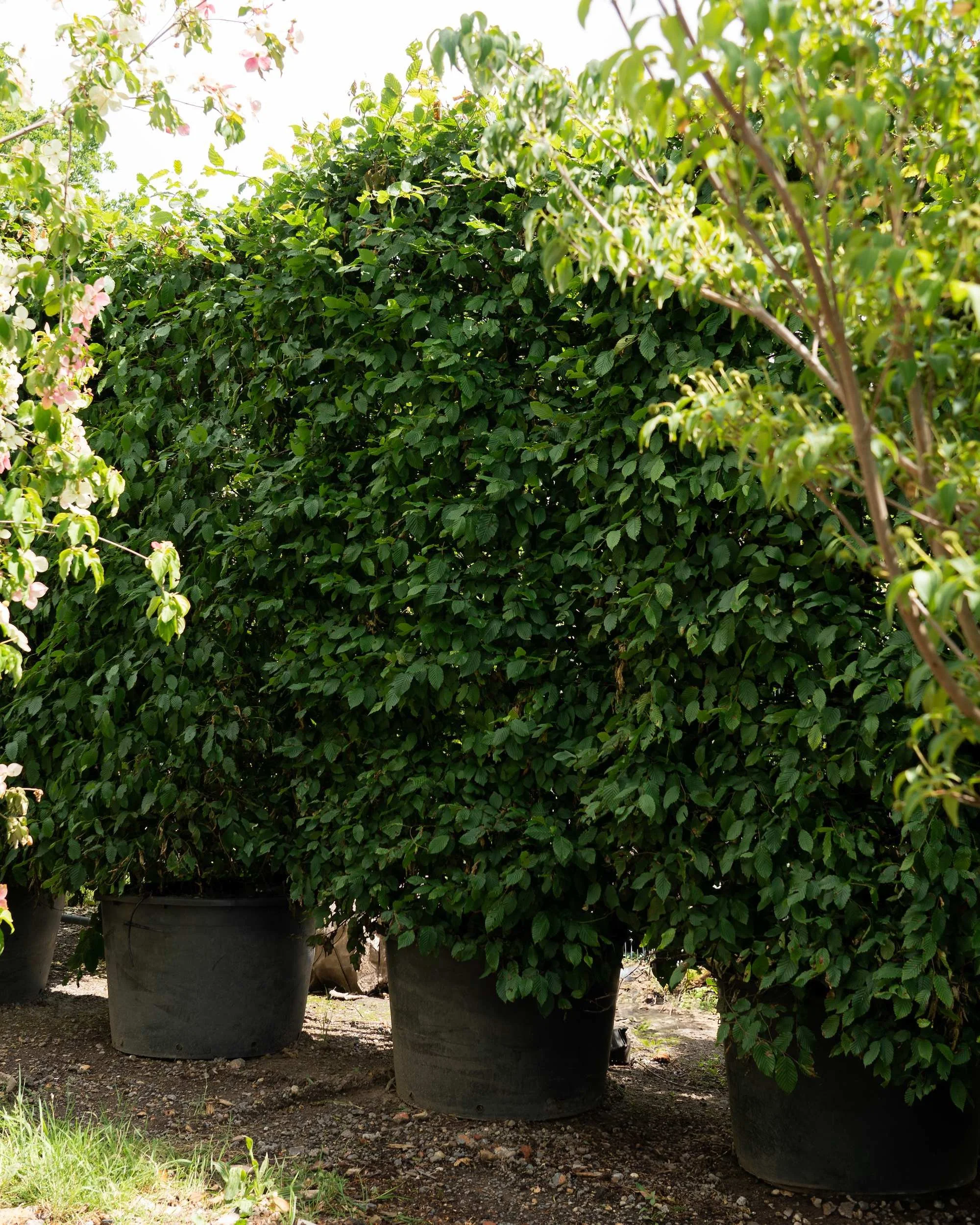
Tough, handsome and endlessly versatile, Carpinus betulus makes a dense, crisp hedge that thrives where many others struggle, including heavy clay and exposed sites.
Fresh green, softly pleated leaves
Retains some dry leaves in winter when clipped
Thrives on heavy clay and in exposed spots
Responds beautifully to clipping
Please check before you visit. Our nursery is very well stocked, but what we hold changes with the seasons, so this plant may not always be in stock. Enquire before you head over and we will check availability and the sizes we have for you.
At a glance
Type
Hedging
Foliage
Deciduous, holding some dry leaves through winter when clipped
Seasons of interest
Spring and summer foliage, autumn colour
Growth rate
Moderate
Hedge height
Suits hedges from about 1.2 m to over 3 m
Position
Full sun or partial shade, including exposed sites
Soil
Most soils, including heavy clay and damp ground
Hardiness
Fully hardy in the UK
Available
A range of sizes, from smaller plants to mature specimens for an instant result. Ask our team for current availability and pricing.
Why we love hornbeam
If your garden is on heavy clay, plant hornbeam and stop worrying. Carpinus betulus is one of the toughest hedging plants you can grow, happy in clay, damp ground, exposed sites and frost pockets, and it's elegant with it. Its pleated, toothed leaves give a fine, crisp texture all summer, then turn soft butter yellow in autumn.
It also does more in winter than you'd expect. Hornbeam is deciduous, but a clipped hedge often holds some of its dry, golden-brown leaves into winter, so you get more screening than from most deciduous hedges, with a lighter feel than beech. It's native to south-east England.
Choosing a size
Start with the job you want the hedge to do. 60 to 100cm makes a low boundary or division, 100 to 150cm gives you garden rooms and front boundaries, and 150 to 200cm brings privacy at the classic six-foot height. For tall screens against buildings or overlooking windows, go for 250cm and above.
How many per metre depends on how wide the plants are when they arrive: divide 100 by the width in centimetres. A 50cm wide plant goes in at 2 per metre. Bare-root whips go in more densely, often 5 per metre in a staggered double row. The calculator above works it out for you, and the team will check the spacing on every order.
Planting
Plant between late autumn and early spring, avoiding frozen or waterlogged ground, which on heavy clay may mean waiting a few days after heavy rain. Dig a trench about 60cm wide and loosen the base and sides with a fork, so the roots grow out into the soil rather than circling in the trench. Root-balled plants sit with the top of the ball level with the soil: loosen natural hessian at the neck and remove any plastic. Water deeply and spread 5 to 7cm of peat-free mulch along the row, clear of the stems.
The one thing hornbeam doesn't love is deep shade, where it grows slowly and thinly. For a heavily shaded boundary, choose yew instead.
Looking after it
Water deeply once a week in dry weather for the first two summers. Once established, clip once a year in late summer, around August, for a crisp line through autumn and winter, keeping the top slightly narrower than the base. Check for nesting birds first. If a hedge ever gets away from you, hornbeam regrows readily: cut one side back hard in winter, then the other side the following winter.
Hornbeam or beech?
They look alike and are clipped the same way, so it mostly comes down to soil. Choose hornbeam for clay, damp ground and windy sites, and beech for free-draining soil, chalk and the most reliable copper winter leaves.
See it in person
Every plant at Form is hand-selected, none contains new peat, and nothing beats choosing yours by eye. Visit our Row Town showroom in Surrey, just 30 minutes from London, where our team will show you the best of what is on the nursery right now. We deliver across London, Surrey and the Home Counties, and nationwide.
Walk in any time during opening hours and you will be looked after. If you would like dedicated time with a specialist, book a Genus Bar appointment.
Frequently asked questions
-
Once established, a hornbeam hedge typically grows 30 to 60cm a year, depending on soil and conditions. The first season after planting is mostly spent building roots, and growth picks up from the second year. Watering in dry spells and a weed-free base help it grow at its best.
-
A hornbeam hedge can be kept from around 1m (3 ft) to 5m (16 ft) or more with regular clipping, and it is often grown at 1.8 to 2m (6 to 6.5 ft) for privacy. Hornbeam is also the classic plant for pleached screens on clear stems, which give height above a lower hedge or planting.
-
A clipped hornbeam hedge often keeps some of its dry, golden-brown leaves through winter, particularly on young and regularly trimmed plants. It holds them less reliably than beech, so it has a lighter winter look, but it still gives more screening than most deciduous hedges.
-
Yes. Hornbeam is one of the best hedging plants for heavy clay and damp ground, and it copes with wetter soils than beech. It also grows well on chalk and loam, and tolerates exposed, windy sites and frost pockets.
-
Hornbeam grows well in full sun and partial shade, and tolerates light shade from nearby trees or buildings. In deep shade it grows more slowly and less densely, so for a heavily shaded boundary yew (Taxus baccata) is a better choice.
-
The best time to plant a hornbeam hedge is the dormant season, from late autumn to early spring. Bare-root hornbeam is available from roughly November to March, root-balled hornbeam from roughly October or November to March, and pot-grown hornbeam can be planted all year with good watering.
-
Hornbeam spacing depends on how wide the plants are supplied: divide 100 by the width in centimetres, so plants 50cm wide go in at 2 per metre. Bare-root hornbeam whips are planted more densely, often 5 per metre in a staggered double row or 3 per metre in a single row. The Form Plants team confirms spacing for each order.
-
Cut an established hornbeam hedge once a year in late summer, around August, for a crisp shape through autumn and winter. Vigorous young hedges can also take a light trim in early summer. Hornbeam regrows readily, so an overgrown hedge can be cut back hard in winter, one side at a time.
-
Choose hornbeam for heavy clay, damp ground and exposed or windy sites. Choose beech (Fagus sylvatica) for free-draining soils and chalk, the most reliable copper winter leaves and the option of purple foliage. Both are native and clipped once a year in late summer.
-
The cost of a hornbeam hedge depends on the height you start with, the format and the tier you choose. Value hornbeam plants are younger plants that knit together over a few seasons and suit longer runs on a budget, while Premium plants are fuller and more mature, including ready-made hedge elements for an instant finish. Live prices and sizes are shown at the top of this page, and the team will confirm plant numbers and a full quote for each order.
-
Yes. You are welcome to visit the Row Town showroom in Surrey, open Monday to Saturday and on bank holidays (closed on Sundays), with no appointment needed. For dedicated one-to-one help choosing plants and working out quantities, book a Genus Bar appointment through our website or email info@formplants.com.
-
Yes. Our in-house team arranges delivery across Surrey, London, the Home Counties and nationwide, with HIAB or Moffett crane offloading for larger root-balled plants and hedge elements. Delivery is quoted for each order based on its size and location, so send your postcode to info@formplants.com and the team will confirm.
All our hedging
Explore every option in our hedging collection, or view them all with photographs →
Can’t see what you’re looking for?
Get in touch and we’ll help you find it. Our nursery is very well stocked and we can source almost any plant through our network of trusted growers. Email info@formplants.com, or send us your whole plant list through our bespoke sourcing service.