
Hedging
Ligustrum vulgare
Wild privet
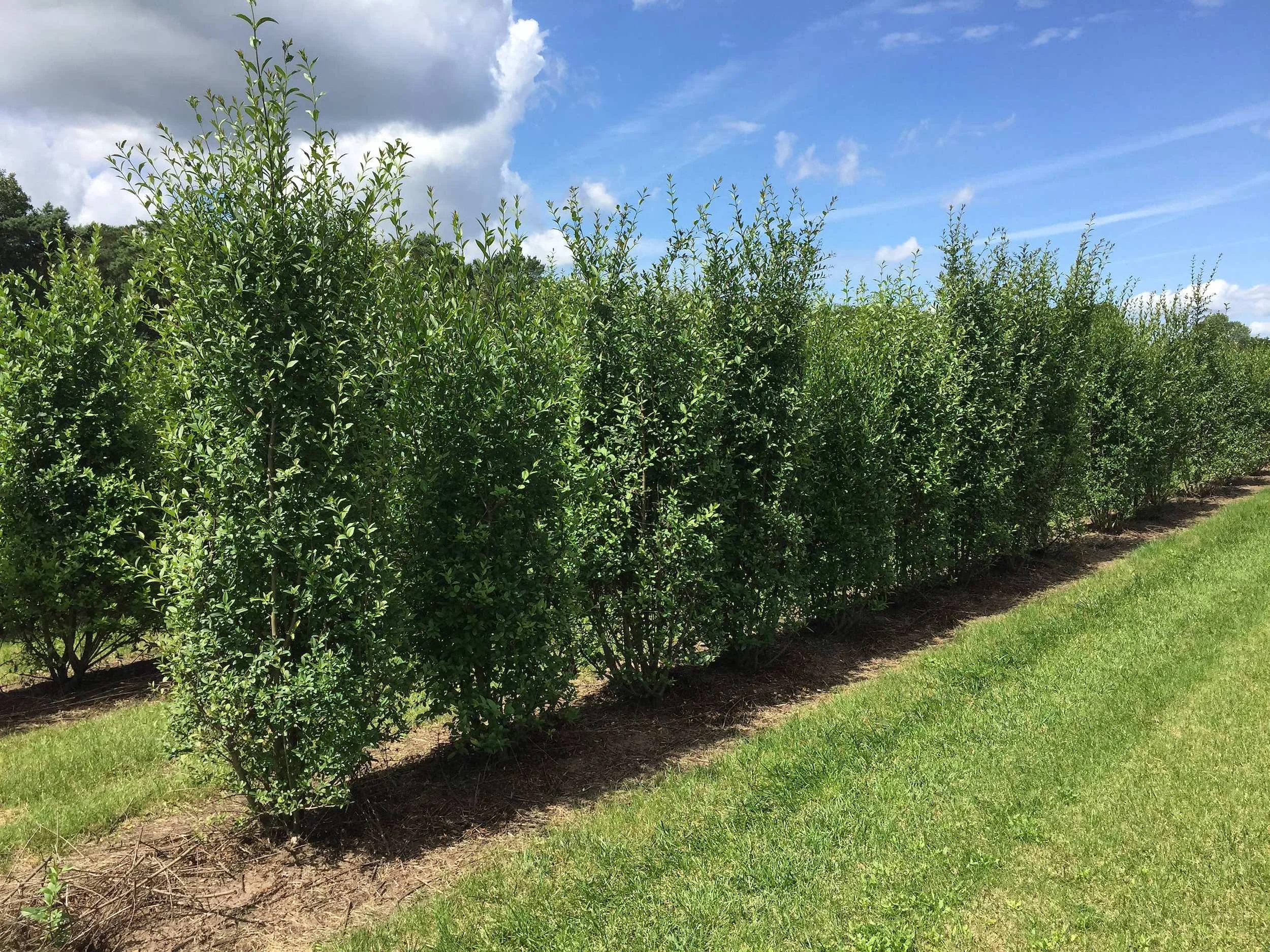
Our native privet forms a dense, semi-evergreen hedge with scented white flowers and black berries for birds.
Native and good for wildlife
Semi-evergreen in mild winters
Scented summer flowers
Fast-growing and easy to clip
Please check before you visit. Our nursery is very well stocked, but what we hold changes with the seasons, so this plant may not always be in stock. Enquire before you head over and we will check availability and the sizes we have for you.
At a glance
Type
Hedging
Foliage
Semi-evergreen
Seasons of interest
Summer flowers, autumn berries
Growth rate
Fast
Hedge height
Suits hedges from about 1 m to 2.5 m
Position
Full sun or partial shade
Soil
Most soils, including chalk
Hardiness
Fully hardy in the UK
Available
A range of sizes, from value hedging plants to large instant hedging for an immediate result. Ask our team for current availability and pricing.
Why we love wild privet
If you want a hedge that grows fast, copes with almost anything and gives plenty back to wildlife, plant wild privet. Ligustrum vulgare is a native with slim, dark green leaves that clip into a tight, formal finish, and it's one of the toughest hedges you can plant: at home on chalk, where it grows wild across the downs, and happy on clay, in shade, in town pollution and in coastal wind.
Leave it a little looser and it rewards you. Sprays of creamy, strongly scented flowers in June and July hum with bees, glossy black berries follow in autumn for blackbirds and thrushes, and it's the food plant of the privet hawk-moth, one of Britain's largest moths. Pair it with hawthorn or plant it in mixed native hedging for a wildlife boundary.
Choosing a size
Privet puts on around 30 to 60cm a year once settled, so you don't need to start big. Bare-root whips of 40 to 80cm are the most economical way to plant a long country hedge, and 60 to 100cm plants suit garden boundaries. For privacy at around six feet from day one, start at 150 to 200cm.
How many per metre depends on how wide the plants are when they arrive: divide 100 by the width in centimetres. A 50cm wide plant goes in at 2 per metre. Bare-root whips go in far more densely, often 5 to 7 per metre in a staggered double row. The calculator above works it out for you, and the team will check the spacing on every order.
Planting
Plant in the dormant season, from late autumn to early spring. Soak bare roots for an hour first, dig a trench rather than separate holes, plant at the same depth the plants grew, water well and mulch with peat-free compost. Then cut bare-root privet back by around half. It feels bold, but it makes the plants branch from the base for a dense hedge. Privet grows in almost any soil, but it won't take ground that is permanently waterlogged.
Looking after it
Water well through the first two summers, once or twice a week in dry spells; after that it's very drought tolerant. A formal privet hedge looks its best with two or three trims between May and late summer, or trim a country hedge once in late winter for more flowers and berries. Wear gloves and clear up the clippings, as all parts of privet, especially the berries, are harmful if eaten.
Does it keep its leaves?
Mostly. Wild privet is semi-evergreen: in mild areas and sheltered gardens it holds much of its foliage through winter, while in cold winters it sheds more before regrowing in spring. On a mild site, that means good cover all year round.
See it in person
Every plant at Form is hand-selected, none contains new peat, and nothing beats choosing yours by eye. Visit our Row Town showroom in Surrey, just 30 minutes from London, where our team will show you the best of what is on the nursery right now. We deliver across London, Surrey and the Home Counties, and nationwide.
Walk in any time during opening hours and you will be looked after. If you would like dedicated time with a specialist, book a Genus Bar appointment.

Frequently asked questions
-
Both wild privet (Ligustrum vulgare) and garden privet (Ligustrum ovalifolium) make excellent hedges. Wild privet is native, very tough, great on chalk and especially good for wildlife, while garden privet has broader, glossier leaves and stays more reliably evergreen for a formal suburban look.
-
Ligustrum vulgare, or wild privet, is native to Britain, with slim, matt leaves, and is semi-evergreen. Ligustrum ovalifolium, or garden privet, comes from Japan and Korea, has broader, oval, glossy leaves and is mostly evergreen. Both grow quickly and clip into dense hedges.
-
Wild privet (Ligustrum vulgare) is semi-evergreen: it keeps much of its foliage in mild winters and sheltered gardens, and sheds more leaves in cold winters before regrowing in spring. Garden privet (Ligustrum ovalifolium) is more reliably evergreen.
-
Privet is one of the faster hedging plants, typically growing around 30 to 60cm a year once established. That means a young privet hedge thickens up within a few seasons, and it looks its best with two or three trims a year.
-
Spacing depends on the size and width of the plants. Bare-root privet whips are often planted at 5 to 7 per metre in a staggered double row, while larger plants are spaced by width: divide 100 by the width in centimetres, so plants 50cm wide go in at 2 per metre. The Form Plants team confirms spacing for each order.
-
The best time to plant privet is in the dormant season, from late autumn to early spring. Bare-root privet is available roughly November to March, root-balled plants from about October or November to March, and pot-grown plants can be planted all year with watering.
-
Trim a formal privet hedge two or three times a year between May and late summer to keep it dense and neat. Check for nesting birds before clipping, as active nests are protected, typically from March to August. Overgrown privet can be cut back hard in late winter or early spring.
-
Yes, all parts of privet, especially the black berries, are harmful if eaten and can upset dogs, cats, horses and people. Established hedges are rarely a problem, but clear up clippings and discourage pets from eating the berries.
-
Yes, wild privet is excellent for wildlife. Its scented summer flowers are visited by bees and other pollinators, its black autumn berries feed blackbirds and thrushes, its dense growth shelters nesting birds, and it is the food plant of the privet hawk-moth caterpillar.
-
The cost depends on the size, format and tier you choose. Value plants, including bare-root whips, are the most economical way to plant a long privet hedge, while Premium plants are fuller root-balled plants and instant hedge troughs for a finished hedge straight away. Live prices and sizes are shown on this page, and the team confirms quantities and pricing for each order.
-
Yes. You are welcome to visit the Form Plants showroom at Row Town in Surrey, open Monday to Saturday and on bank holidays, to see the hedging and choose your plants. You can simply pop in during opening hours, or book a Genus Bar appointment for unhurried time with the team and help with quantities.
-
Yes, Form Plants delivers nationwide. Our in-house team arranges every delivery and can offload larger root-balled plants and instant hedge elements by HIAB or Moffett crane where access allows. Delivery is quoted for each order depending on size, quantity and location.
All our hedging
Explore every option in our hedging collection, or view them all with photographs →
Can’t see what you’re looking for?
Get in touch and we’ll help you find it. Our nursery is very well stocked and we can source almost any plant through our network of trusted growers. Email info@formplants.com, or send us your whole plant list through our bespoke sourcing service.