
Topiary
Carpinus betulus
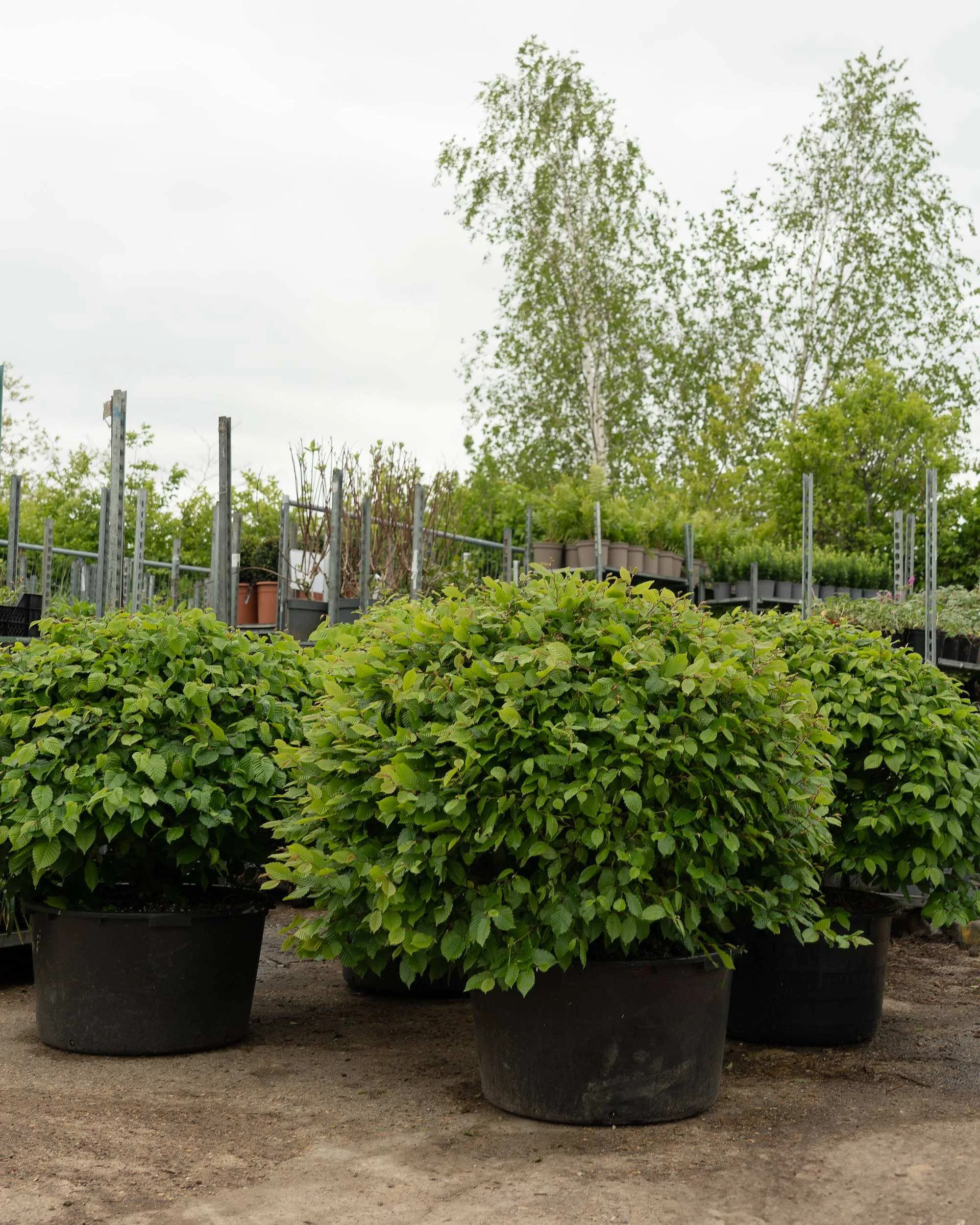
Hornbeam topiary
Crisp, fresh green and wonderfully tough, Carpinus betulus topiary brings architectural structure to gardens, including those on heavy clay.
Fresh, pleated green leaves
Clips to clean cubes, blocks and columns
Copes with clay, damp soil and exposure
Golden autumn colour
Please check before you visit. Our nursery is very well stocked, but what we hold changes with the seasons, so this plant may not always be in stock. Enquire before you head over and we will check availability and the sizes we have for you.
At a glance
Type
Topiary
Foliage
Deciduous, holding some dry leaves through winter when clipped
Shapes
Cubes, blocks, columns, boxes on stems and bespoke forms
Growth rate
Moderate
Position
Full sun or partial shade
Soil
Most soils, including heavy clay
Pots or ground
Best in the ground; large containers possible with care
Hardiness
Fully hardy in the UK
Available
Individually shaped pieces in a range of sizes. Ask our team for current shapes and pricing.
Why we love it
Hornbeam topiary brings crisp structure to the garden with a softer, more natural character than evergreens. Its leaves are fresh green and neatly pleated, with finely serrated edges that give clipped surfaces a lovely textured finish. In spring the new growth is bright and vivid, through summer the shapes are dense and leafy, and in autumn the foliage turns yellow and then warm brown.
When clipped, Carpinus betulus often holds on to some of its dry, papery leaves through winter, so the shapes keep their outline and a warm russet tone until the fresh growth pushes them off in spring. It is a native tree, hardy and adaptable, and it is especially valuable because it thrives on heavy clay where many other topiary plants struggle.
Choosing a size
Hornbeam topiary comes in a range of shapes, from cubes, blocks and domes to cones, columns and box-headed standards with a clear stem and a square or rounded head. Lower shapes suit the edge of a terrace or a border, while taller columns and standards add height and rhythm to a formal layout. Because each piece is clipped by hand and varies a little, it is well worth choosing your shapes together at the nursery, especially when you want matching pairs or rows.
How to use it
Use hornbeam cubes and blocks to bring structure to a naturalistic border, set pairs of columns or standards either side of a path or doorway, or repeat domes along a walk for rhythm. Box-headed standards above underplanting create an elegant, raised layer, and hornbeam shapes contrast beautifully with soft grasses and perennials. They also work well in large containers on a terrace.
Planting
Root-balled hornbeam is planted between November and March, and pot-grown topiary can go in at any time with regular watering. Dig a hole wider than the root ball but no deeper, keep the top level with the soil, firm gently and water thoroughly. Taller standards and columns benefit from a stake while they settle. Finish with a mulch of peat-free compost.
Looking after it
Water regularly through dry spells for the first two summers. Clip once a year in late summer, usually August, using sharp shears or hedge trimmers, and the shape will stay crisp until the following year. A second light trim in early summer keeps very formal shapes extra sharp. Hornbeam grows in most soils, including heavy clay, in sun or partial shade.
What is the difference between hornbeam and beech topiary?
They look similar, but hornbeam has crisper, pleated leaves with serrated edges, while beech leaves are glossier with smooth, gently wavy edges. Hornbeam copes much better with heavy, wet clay, whereas beech prefers free-draining soil. Both hold some dry leaves through winter when clipped, though beech usually holds them more fully.
See it in person
Every plant at Form is hand-selected, none contains new peat, and nothing beats choosing yours by eye. Visit our Row Town showroom in Surrey, just 30 minutes from London, where our team will show you the best of what is on the nursery right now. We deliver across London, Surrey and the Home Counties, and nationwide.
Walk in any time during opening hours and you will be looked after. If you would like dedicated time with a specialist, book a Genus Bar appointment.

Frequently asked questions
-
No, hornbeam is deciduous, but clipped shapes often hold some of their dry, brown leaves through winter, which helps them keep their outline.
-
Clip once a year in late summer, usually in August. For a very sharp finish, you can give an extra light trim in early summer.
-
Hornbeam grows at a moderate rate, which makes it easy to keep in shape with an annual clip.
-
Yes, it is one of the best topiary plants for heavy clay, and it also grows well on most other soils.
-
Yes, smaller shapes do well in large containers of peat-free, loam-based compost. Water regularly through summer and feed each spring.
-
It grows well in full sun or partial shade. In deeper shade growth becomes thinner and the shapes less dense.
-
Yes, Carpinus betulus is native to south-east England and is a good plant for wildlife, offering shelter for birds and food for caterpillars.
-
For larger shapes and standards, yes. Hornbeam is not affected by box blight or box tree caterpillar, though it is deciduous rather than evergreen.
-
We keep a very well-stocked nursery, but our stock changes with the seasons, so availability varies. Please email us before you visit and we will check what we have and the sizes available.
-
Yes, and we recommend it. Every piece of topiary is hand-shaped, so no two are quite the same. Visit our Row Town showroom in Surrey to choose your pieces by eye. Walk in any time during opening hours, or book a Genus Bar appointment with one of our specialists.
-
Yes, we deliver nationwide. Deliveries are arranged by our dedicated in-house operations team, and larger pieces can be offloaded by HI-AB or Moffett where needed.
All our topiary
Explore every option in our topiary collection, or view them all with photographs →
Carpinus betulus
Can’t see what you’re looking for?
Get in touch and we’ll help you find it. Our nursery is very well stocked and we can source almost any plant through our network of trusted growers. Email info@formplants.com, or send us your whole plant list through our bespoke sourcing service.