
Topiary
Taxus baccata
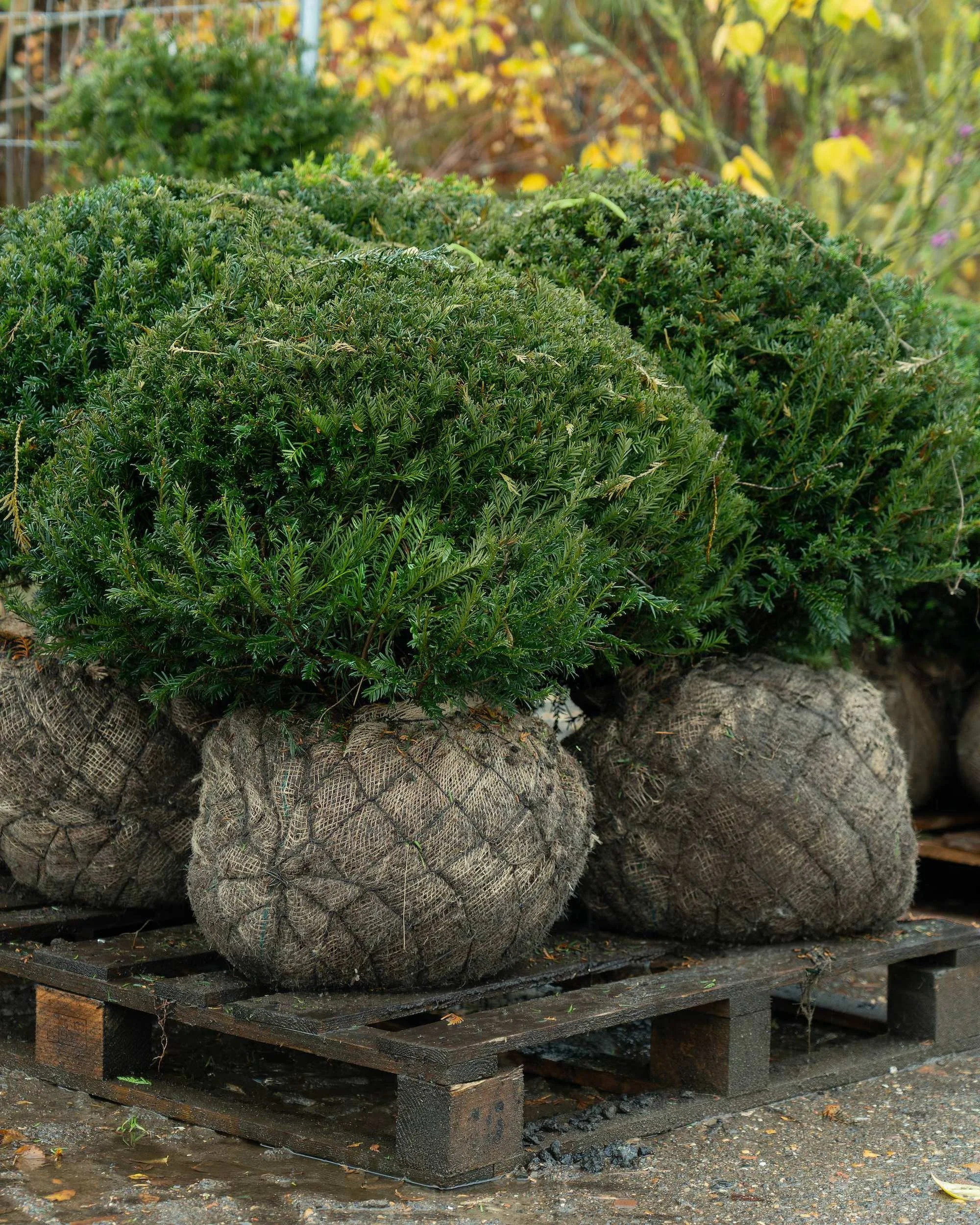
Yew topiary
The finest material for topiary. Dense, dark and velvety, Taxus baccata holds crisp shapes beautifully and brings instant structure and timeless elegance to any garden.
Evergreen, with a dense, fine texture
Holds sharp, precise shapes
Long-lived and slow-growing, so easy to keep in shape
Thrives in sun or shade
Please check before you visit. Our nursery is very well stocked, but what we hold changes with the seasons, so this plant may not always be in stock. Enquire before you head over and we will check availability and the sizes we have for you.
At a glance
Type
Topiary
Foliage
Evergreen
Shapes
Domes, balls, cones, cubes, pyramids, spirals and bespoke forms
Growth rate
Slow to moderate
Position
Full sun to full shade
Soil
Any well-drained soil, including chalk; avoid waterlogging
Pots or ground
Both, with regular watering in containers
Hardiness
Fully hardy in the UK
Available
Individually shaped pieces in a range of sizes. Ask our team for current shapes and pricing.
Why we love it
Yew is the king of topiary. Its fine, dark green needles create a dense, velvety surface that can be clipped into almost any shape with incredible precision, from simple cones and balls to spirals, peacocks and tiered forms. It holds its deep colour all year and provides a timeless, architectural backbone to the garden in every season.
Taxus baccata is a native tree with a history in British gardens going back centuries, and many of our most famous formal gardens are built around ancient clipped yews. It is remarkably long-lived, adaptable to sun or deep shade, and unlike most conifers it regrows readily from old wood, so it can be renovated and reshaped even after years of neglect.
Choosing a size
Yew topiary comes in a wide range of shapes, including balls, domes, cones, pyramids, cubes, columns, spirals and more elaborate sculptural forms. Small balls and cones suit containers and edging, while tall pyramids, spirals and columns make strong focal points and add height to formal layouts. Because yew grows steadily, larger pieces represent many years of clipping, and every one has its own character, so we encourage you to come and choose by eye.
How to use it
Use yew balls and domes to bring structure to borders, pairs of cones or spirals to frame an entrance, or a line of columns to lead the eye down a path. Clipped yew makes a superb dark backdrop for flowers and perennials, and repeated shapes give rhythm and order to a planting scheme. It also thrives in large containers on terraces and in courtyards.
Planting
Root-balled yew is planted between October and March, and pot-grown topiary can go in at any time with regular watering. Dig a hole wider than the root ball but no deeper, keep the top level with the soil, firm gently and water thoroughly. Yew dislikes waterlogging, so improve drainage on heavy soils. Mulch with peat-free compost.
Looking after it
Water regularly through dry spells for the first two summers, then it is very self-sufficient. Clip once a year in late summer or early autumn, from August to September, using sharp shears for a crisp finish; complex shapes may need a second light trim in early summer. Yew grows in any well-drained soil, including chalk, in full sun to full shade.
Is yew poisonous to dogs?
Yes. All parts of yew are highly toxic to dogs, cats, horses and people if eaten, apart from the red fleshy part of the berry, though the seed within it is poisonous. Clear up clippings promptly and never leave them where pets or livestock could reach them. Clipped topiary produces few berries, and with sensible care it can be grown safely in most gardens.
See it in person
Every plant at Form is hand-selected, none contains new peat, and nothing beats choosing yours by eye. Visit our Row Town showroom in Surrey, just 30 minutes from London, where our team will show you the best of what is on the nursery right now. We deliver across London, Surrey and the Home Counties, and nationwide.
Walk in any time during opening hours and you will be looked after. If you would like dedicated time with a specialist, book a Genus Bar appointment.

Frequently asked questions
-
Yes, yew keeps its dark green needles all year round.
-
Yew grows slowly to moderately, often 15 to 30cm a year once established, which makes it easy to maintain as topiary.
-
Clip once a year in late summer or early autumn, from August to September. Elaborate shapes may benefit from a light extra trim in early summer.
-
Yes, it is one of the most shade-tolerant evergreens and grows well from full sun to full shade.
-
Yes, unlike most conifers, yew regrows readily from old wood, so overgrown topiary can be renovated by cutting back hard in spring, ideally one side at a time over two years.
-
Yes, yew grows well in large containers of peat-free, loam-based compost with good drainage. Water regularly, but avoid waterlogging.
-
Browning is most often caused by waterlogged roots or drought stress, particularly in newly planted yew. Ensure the soil drains freely and water regularly through dry spells while it establishes.
-
Yes, Taxus baccata is native to Britain and is one of our longest-lived trees, with some ancient specimens thought to be well over a thousand years old.
-
We keep a very well-stocked nursery, but our stock changes with the seasons, so availability varies. Please email us before you visit and we will check what we have and the sizes available.
-
Yes, and we recommend it. Every piece of topiary is hand-shaped, so no two are quite the same. Visit our Row Town showroom in Surrey to choose your pieces by eye. Walk in any time during opening hours, or book a Genus Bar appointment with one of our specialists.
-
Yes, we deliver nationwide. Deliveries are arranged by our dedicated in-house operations team, and larger pieces can be offloaded by HI-AB or Moffett where needed.
All our topiary
Explore every option in our topiary collection, or view them all with photographs →
Taxus baccata
Can’t see what you’re looking for?
Get in touch and we’ll help you find it. Our nursery is very well stocked and we can source almost any plant through our network of trusted growers. Email info@formplants.com, or send us your whole plant list through our bespoke sourcing service.